 Pусский
Piezoresistive Pressure Sensors: Principles, Diffused Silicon vs Monocrystalline Silicon, and Industrial Application Solutions
From: Issued date 2026.02.12 Back
1. Introduction
Pressure measurement is one of the most critical parameters in modern industrial automation, process control, and scientific instrumentation. Among various sensing technologies, piezoresistive pressure sensors havebecome one of the most widely adopted solutions due to their high sensitivity, mature manufacturing processes, and cost effectiveness. These sensors rely on the physical piezoresistive effect of silicon combined with integrated circuit and MEMS fabrication technologies to convert mechanical stress into electrical signals.
Today, piezoresistive pressure sensors are widely used across industries such as oil and gas, water treatment, medical devices, hydraulic systems, and smart manufacturing. The global piezoresistive pressure sensor market continues to grow steadily, driven by demand from automotive, biomedical, and industrial sectors. In 2023, the global market was valued at approximately USD 3.5 billion, with diffused silicon piezoresistive sensors representing the largest sub-segment share.
This article provides a professional technical overview of piezoresistive pressure sensors, focusing on the two mainstream technologies — diffused silicon pressure sensors and monocrystalline silicon pressure sensors — including their principles, structures, performance characteristics, and application solutions.
2. Basic Physical Principle of Piezoresistive Pressure Sensors
Piezoresistive pressure sensors operate based on the piezoresistive effect of semiconductor materials, primarily silicon. When mechanical stress is applied to silicon, the crystal lattice structure deforms, which changes carrier mobility and therefore alters electrical resistivity.
Unlike metal strain gauges, where resistance changes mainly due to geometric deformation, semiconductor piezoresistors show resistance changes primarily due to intrinsic resistivity variation, making them 50–100 times more sensitive than metal-based sensors.
In a typical sensor structure:
Silicon acts as both mechanical elastic element and sensing element
Piezoresistors are formed using semiconductor diffusion or implantation processes
The resistors are connected in a Wheatstone bridge configuration
Pressure causes diaphragm deformation
Resistance changes create bridge imbalance
Output voltage is proportional to applied pressure
The Wheatstone bridge design enables detection of extremely small resistance variations and converts them into measurable voltage signals.
Mathematically, the resistance change is proportional to mechanical stress through piezoresistive coefficients, which depend on crystal orientation and doping conditions.
3. Diffused Silicon Pressure Sensors
3.1 Structure and Manufacturing
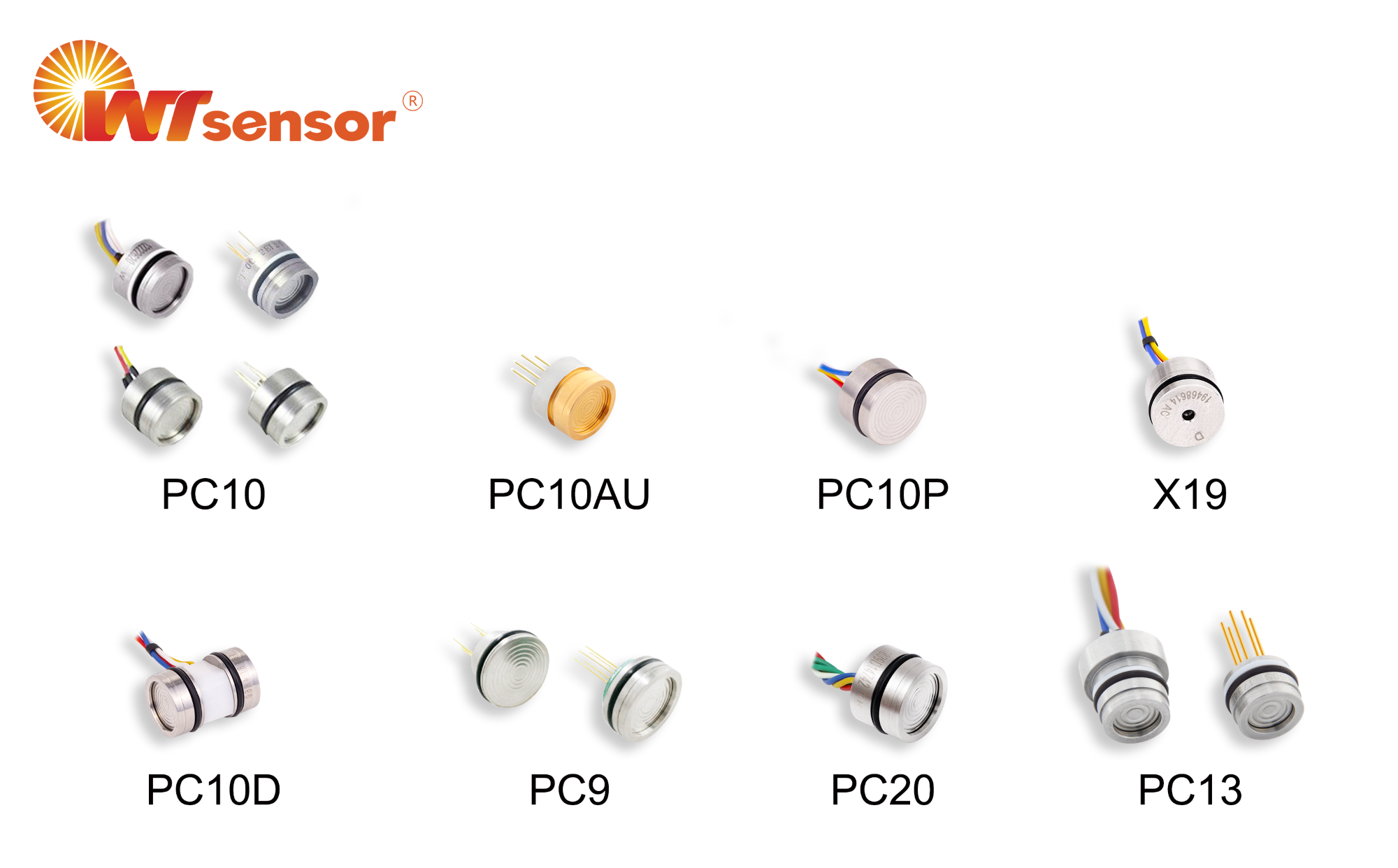
Diffused silicon pressure sensors are fabricated using integrated circuit diffusion processes. P-type or N-type impurities are diffused into a silicon substrate to form piezoresistors aligned along specific crystal orientations. These resistors form a Wheatstone bridge on a silicon diaphragm.
The diaphragm is typically produced using anisotropic micromachining techniques, allowing precise thickness control and high mechanical repeatability.
3.2 Performance Characteristics
Key advantages include:
High measurement accuracy
Excellent long-term stability
Strong overpressure resistance
Mature manufacturing technology
Good repeatability and low hysteresis
Because sensing, conversion, and detection occur within the same silicon element, measurement errors from intermediate conversion stages are minimized.
Diffused silicon sensors are also suitable for wide pressure ranges, typically from low kPa levels to tens of MPa, depending on diaphragm design.
3.3 Market Position
Market research indicates diffused silicon piezoresistive sensors currently represent the largest share within piezoresistive sensor types, mainly due to their precision and reliability in harsh environments.
3.4 Application Solutions
Diffused silicon pressure sensors are widely used in:
Industrial process control systems
Pressure calibration instruments
Hydraulic and pneumatic systems
Smart water and energy systems
Biomedical instrumentation
Valve and pipeline monitoring
Their robustness and cost-performance balance make them ideal for mass industrial deployment.
4. Monocrystalline Silicon Pressure Sensors
4.1 Structure and Working Mechanism
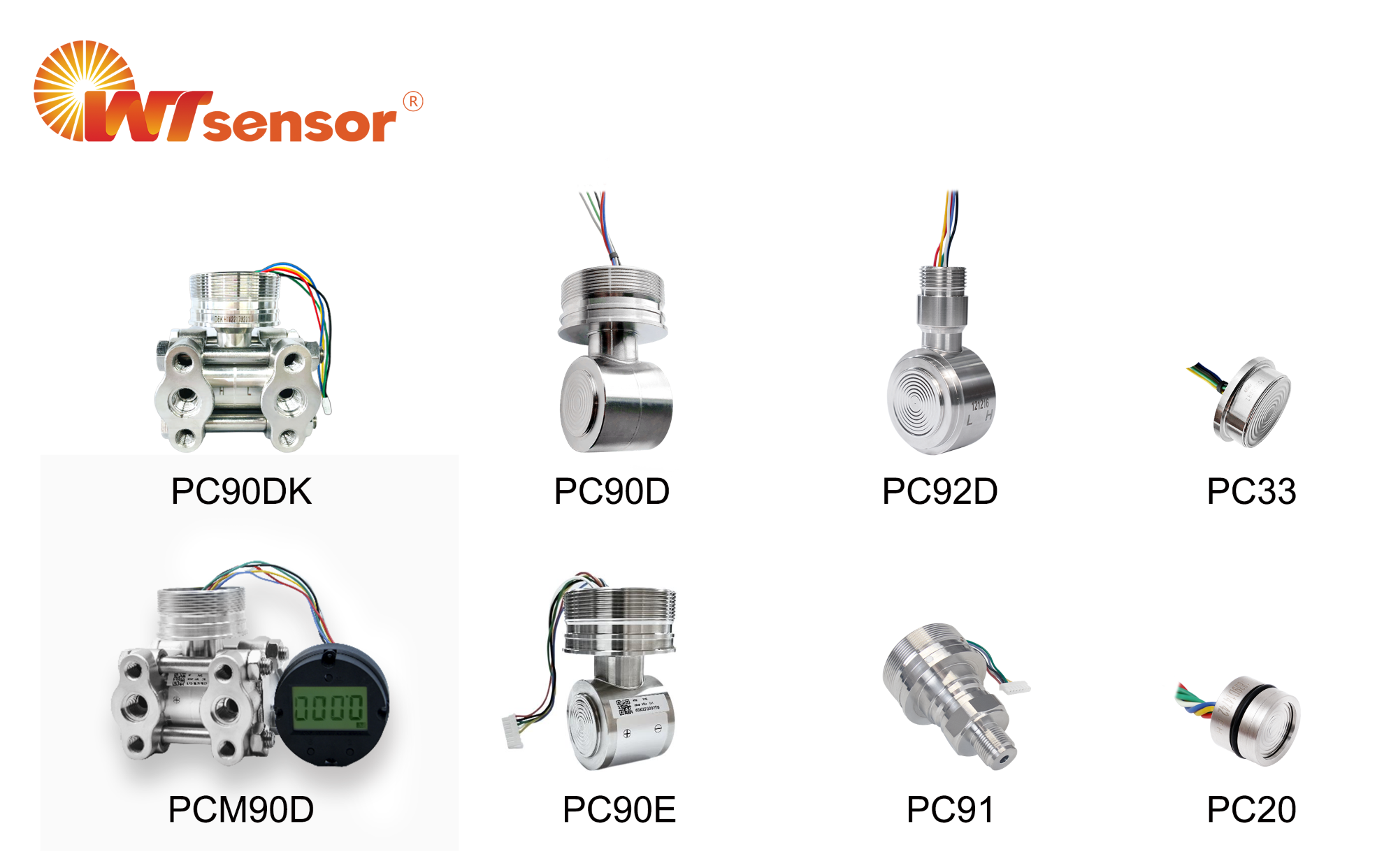
Monocrystalline silicon pressure sensors use single-crystal silicon wafers as the elastic sensing element. Similar to diffused silicon sensors, piezoresistors are integrated into the diaphragm and arranged in a Wheatstone bridge.
Monocrystalline silicon provides extremely high piezoresistive sensitivity because electrical conductivity strongly depends on lattice deformation in doped semiconductors.
4.2 Performance Characteristics
Advantages:
Very high sensitivity (>10 mV/V typical output)
Excellent linearity at constant temperature
Fast response to dynamic pressure changes
Limitations:
Strong temperature dependence
Offset drift with temperature variation
Requires advanced compensation circuits
These temperature-related challenges often increase system design complexity.
4.3 Application Areas
Monocrystalline silicon sensors are typically used in:
Precision industrial measurement
Automated manufacturing systems
Low-pressure and small-span measurement
High-sensitivity scientific instrumentation
Because of cost and temperature compensation requirements, they are less common in general industrial applications compared with diffused silicon solutions.
5. Technology Comparison: Diffused Silicon vs Monocrystalline Silicon
| Parameter | Diffused Silicon | Monocrystalline Silicon |
|---|---|---|
| Manufacturing maturity | Very mature | Advanced but more complex |
| Cost | Lower | Higher |
| Sensitivity | High | Very high |
| Temperature stability | Better | More temperature sensitive |
| Market adoption | Very high | Moderate |
| Typical use | Industrial control | Precision measurement |
Diffused silicon sensors offer the best balance between performance, reliability, and cost, which explains their widespread industrial adoption. Monocrystalline sensors are preferred when ultra-high sensitivity is required.
6. Integrated MEMS and IC Technology Advantages
Piezoresistive sensors benefit greatly from semiconductor manufacturing compatibility. Silicon enables MEMS microfabrication, allowing high-volume production and miniaturization while maintaining performance consistency.
Typical MEMS advantages include:
Small size and low power consumption
High repeatability and batch consistency
Easy integration with signal conditioning electronics
Cost reduction through wafer-level processing
7. Engineering Considerations in Sensor Design
When selecting or designing piezoresistive pressure sensors, engineers typically evaluate:
7.1 Temperature Compensation
Temperature affects resistance, offset, and sensitivity. Compensation can be achieved using:
On-chip temperature sensors
Digital calibration algorithms
Signal conditioning circuits
7.2 Packaging and Media Isolation
Industrial sensors often use oil-filled isolation diaphragms to protect silicon chips from corrosive media while transmitting pressure efficiently.
7.3 Long-Term Stability
Silicon’s elastic properties provide excellent fatigue resistance, ensuring long operational life under cyclic pressure loads.
8. Future Development Trends
The future of piezoresistive pressure sensor technology is moving toward:
SOI (Silicon-on-Insulator) structures for better temperature stability
Smart sensors with integrated digital output and diagnostics
AI-enabled predictive maintenance sensing
Ultra-low pressure and biomedical micro-sensing
Emerging semiconductor structures continue to improve sensitivity, reliability, and environmental robustness.
Conclusion
Piezoresistive pressure sensors remain one of the most important sensing technologies in modern industry. By leveraging the piezoresistive effect of silicon and advanced integrated circuit manufacturing, these sensors provide highly accurate and reliable pressure measurement solutions.
Diffused silicon pressure sensors dominate industrial markets due to their strong stability, cost efficiency, and mature production technology. Monocrystalline silicon sensors, while less widely used, offer exceptional sensitivity and precision for specialized applications.
As MEMS technology and semiconductor manufacturing continue to evolve, piezoresistive pressure sensors will play an increasingly vital role in smart manufacturing, energy systems, medical instrumentation, and industrial automation.