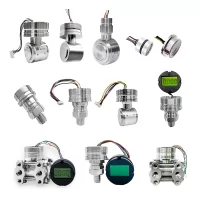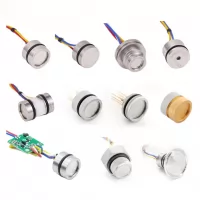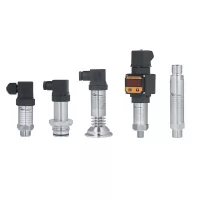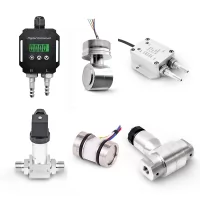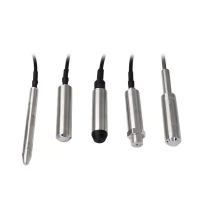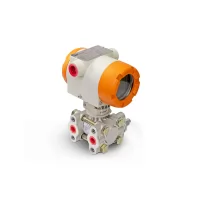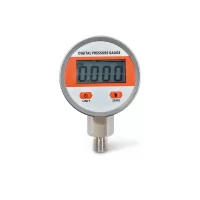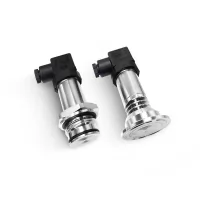
Pressure Sensor & Core Manufacturing: 11-Step Factory Guide
From: Issued date 2026.04.14 Back
In the field of high-precision instrumentation, the reliability of a pressure sensor and its internal pressure core (sensing element) depends on a rigorous manufacturing workflow. As a specialized OEM/ODM factory, we adhere to the following 11-step technical process to ensure long-term stability and accuracy for industrial applications.
Phase I: Pressure Core (Sensing Element) Assembly
1. Precision Die Attachment (Dispensing & Bonding)
The manufacturing begins with bonding the MEMS chip (die) to the pedestal. For ODM projects, die selection is critical to meet specific pressure ranges and media compatibility.
Technical Process: High-grade adhesive is used to bond the chip and ceramic spacer to the base, creating a hermetic seal for the pressure core.
Quality Control: A First Article Inspection (FAI) is performed to verify chip orientation against the "Chip Bonding Atlas."

2. Ultrasonic Gold Wire Bonding
This step establishes the electrical connection between the micro-chip and the external pins using ultrasonic energy and fine gold wire.
Integrity: To ensure reliable signal transmission for the sensing element, we perform daily pull-strength tests on the gold wires.

3. Laser Welding (Core Diaphragm Sealing)
The structural integrity of the pressure core is secured by welding the pressure ring and isolation diaphragm to the body.
Requirement: High-energy laser welding ensures the seal is leak-proof and meets tensile strength specifications, followed by a lead-level FAI.
Phase II: Core Stabilization & Environmental Sealing
4. High-Temperature Aging (Thermal Stress Relief)
Internal mechanical stresses are relieved through a controlled aging process. For OEM partners, this step is vital as it stabilizes the material structure and minimizes zero-drift during the sensor's lifecycle.

5. Vacuum Oil Filling & Steel Ball Sealing
The core's internal cavity is vacuum-filled with silicone oil and sealed via a laser-welded steel ball.
Parameter Control: We select the welding energy based on technical parameter tables.
Durability Test: Daily push-off force tests are conducted on the steel ball seal to ensure performance under overpressure.

6. Laser Marking & Traceability
Each unit is marked with a unique ID using high-precision laser engravers. This ensures 100% lifetime traceability for every OEM product manufactured in our facility.

Phase III: Electronics & Signal Conditioning
7. Automated SMT (Surface Mount Technology)
The sensor's compensation PCB is assembled using automated SMT lines. Any soldering anomalies are manually corrected using precision soldering irons to ensure total circuit continuity.


8. Advanced Calibration & Temperature Compensation
This is the most critical stage for an ODM factory. We utilize an automated "1-to-4" system for pre- and post-compensation testing.
Accuracy: By eliminating thermal errors, we achieve high Full-Scale (FS) precision across wide temperature ranges.
Screening: Products are screened according to strict inspection standards; non-conforming units are rejected.

Phase IV: Final Integration & Precision Soldering
9. Precision Soldering of the Compensation Board
The calibrated PCB is integrated with the pressure core pins via precision soldering.
Technical Validation: Post-soldering, every unit is tested to ensure the output signal matches the internal control requirements.

(Our skilled technicians ensure precision soldering for stable signal output.)
10. Wire Lead Soldering & Customization
High-quality wire leads are soldered to the pins for final signal transmission. As an ODM provider, wire definitions (pinouts) and cable specifications are customized to the client's system requirements.
Integrity Check: Team members self-inspect the soldering quality and wiring definitions before a final lead-level FAI.

11. Protective Potting & Encapsulation
To protect the electronics from harsh environments, the assembly is encapsulated using high-performance potting compound.
Process Detail: We strictly follow mixing ratios to achieve IP65/IP68 protection, ensuring the final pressure sensor is resilient against moisture and vibration.

Technical Summary for OEM/ODM Requirements
The reliability of a pressure sensor is a result of consistent factory discipline. By maintaining First Article Inspections (FAI) and automated temperature compensation, we provide a stable foundation for both standard pressure cores and custom OEM/ODM sensor solutions.
[Technical Inquiry] Contact our engineering team for detailed specifications or factory capability reports.

Contact Information:
Website: www.wtsensor.com
Address: No.5 Wenying Road, Binjiang Development Zone, Nanjing 211161, China
Email: [email protected]
3D VR Demonstration: View 3D VR
Click here to learn more about our manufacturing process and see why WTSensor is a leader in the global pressure measurement industry.
-
To achieve the goal of automatic production, wotian set up a laboratory
Read More > -
Working principle of differential pressure sensor
Read More > -
[Wotian share] How to choose a temperature transmitter
Read More > -
Wotian shares the difference between pressure difference sensors and pressure sensors!
Read More > -
How to Choose the Right Pressure Sensor for Industrial Applications
Read More > -
Pressure Sensors: A Reliable Solution for Water Supply Networks
Read More > -
How to Choose the Right Fuel Level Sensor
Read More >