 Pусский
Key Production Processes for Seal Pressure Transmitters
From: Issued date 2026.06.05 Back
Did you know that a poorly welded joint can cause a pressure transmitter to fail in just 6 months, even if it passes initial testing?
A seal pressure transmitter can pass electrical testing today and still fail months later in the field if a welding joint is unstable, a calibration parameter is improperly collected, or an assembly error goes unnoticed during production. In our manufacturing experience, long-term reliability is determined not by a single test result but by the consistency of every production step.
For this reason, the manufacturing of seal pressure transmitters follows a controlled workflow that combines assembly operations, traceability management, calibration procedures, self-inspection checkpoints, and 100% finished-product verification. Every process has a specific quality objective designed to prevent defects before products leave the factory.
This article explains the key production processes used in seal pressure transmitter manufacturing, how quality is controlled throughout production, and how calibration and testing procedures ensure consistent product performance.
Why Manufacturing Quality Matters
OEM customers, industrial distributors, and engineering teams rarely evaluate a pressure transmitter solely on its datasheet specifications. What matters most is whether every unit delivered performs consistently over years of operation.
Manufacturing quality directly affects:
Measurement accuracy
Zero-point stability
Long-term drift performance
Environmental resistance
Product lifespan
Batch-to-batch consistency
Warranty return rates
Maintenance costs
Even minor variations during assembly or calibration can create measurable differences in output characteristics. A robust production process minimizes these risks and ensures repeatable product performance.
For additional technical information, engineers may refer to our Pressure Sensor Manufacturing Guide, Pressure Transmitter Calibration Process, and Quality-Control Overview resources.
Overview of the Manufacturing Process
The production workflow for seal pressure transmitters consists of five primary manufacturing stages:
Front-End Assembly
Laser Marking
Calibration and Adjustment
Rear-End Assembly
Finished Product Testing
Each stage includes defined inspection requirements and process controls designed to maintain product integrity and traceability.
The workflow can be summarized as:
Front-End Assembly → Laser Labeling → Calibration → Rear-End Assembly → 100% Finished Product Testing
Every unit progresses through this sequence before shipment.
Detailed Production Process
Step 1: Front-End Assembly
Front-end assembly establishes the core sensing structure of the seal pressure transmitter.
Assembly Contents
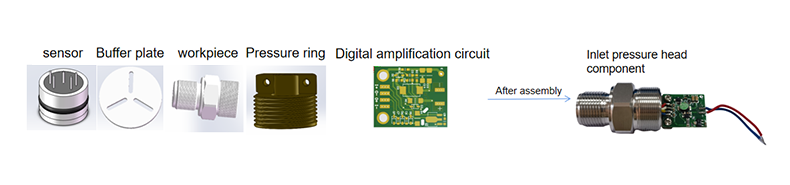
During this process, operators assemble:
Sensor
Buffer board
Fixture
Pressure ring
Amplifier board
The correct integration of these components is critical because they directly affect measurement performance and signal transmission quality.
Quality Objectives
This process serves two primary purposes:
Complete the assembly of the pressure-head module.
Verify the placement and welding quality of the amplifier board.
Process Controls
Our production team carefully checks:
Component positioning accuracy
Mechanical fitment
Welding integrity
Connection reliability
Particular attention is paid to amplifier board placement and soldering quality because defects at this stage may later cause signal instability, offset errors, or intermittent failures.
Risk Prevention
Common risks controlled during front-end assembly include:
Welding defects
Component misalignment
Poor electrical connections
Mechanical stress on sensing elements
Early detection at this stage prevents costly rework during calibration and final testing.
Step 2: Laser Labeling
Traceability begins with product identification.
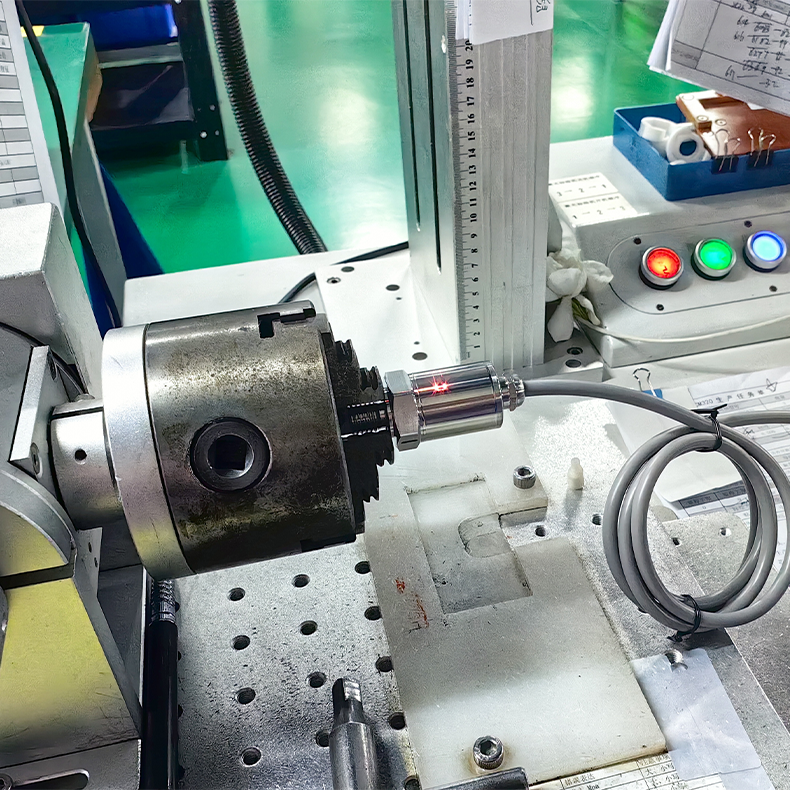
Each seal pressure transmitter receives a unique laser-marked label during the laser labeling process.
Purpose of Laser Marking
The laser marking process achieves:
Unique product identification
Production traceability
Batch management
Quality record linkage
Every transmitter can be traced back to its production records through its unique identification code.
Inspection Requirements
After labeling, operators perform self-inspection of:
Label content accuracy
Label completeness
Marking clarity
The production team leader also conducts verification as an additional checkpoint.
Quality Benefits
This process supports:
Manufacturing traceability
Quality investigation
Root-cause analysis
After-sales support
When field issues occur, traceable identification allows rapid access to production history and test records.
For more information, see our Quality-Control Overview and OEM Customization Services resources.
Step 3: Calibration and Adjustment
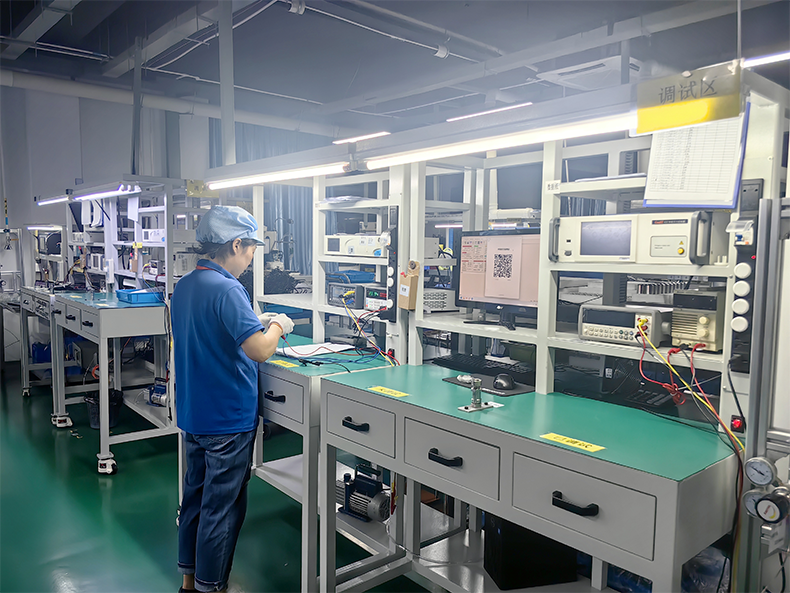
Calibration is one of the most critical processes in seal pressure transmitter manufacturing.
At this stage, raw sensor outputs are adjusted to achieve required performance specifications.
Calibration Method
Calibration is performed using:
Analog circuits
Digital circuits
These calibration methods are used to produce units that meet specified performance parameters.
Data Acquisition Control
A specific process requirement is enforced during calibration:
Pressure must remain stable before data collection begins.
Operators wait until pressure stability is achieved and then maintain the condition for:
5 seconds before collecting calibration data.
This control helps eliminate transient fluctuations that could affect calibration accuracy.
Quality Objectives
Calibration activities verify:
Output signal accuracy
Measurement consistency
Repeatability
Performance compliance
Risks Controlled
This stage helps prevent:
Calibration deviation
Output nonlinearity
Zero-point instability
Span errors
Measurement drift
By enforcing stable-pressure data acquisition, calibration repeatability is significantly improved across production batches.
Step 4: Rear-End Assembly
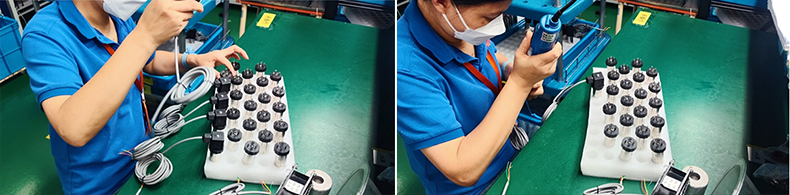
After calibration, products move to rear-end assembly.
This process completes the physical configuration of the transmitter.
Process Tasks
Rear-end assembly includes:
Completing accessory installation
Completing final assembly operations
Wire-Length Verification
An important inspection requirement exists during this stage:
Lead-wire length must be checked according to the parameter table.
This verification ensures that assembly specifications are correctly implemented.
Quality Objectives
Rear-end assembly confirms:
Mechanical completeness
Wiring conformity
Product configuration accuracy
Risks Controlled
Inspection activities help prevent:
Wiring errors
Incorrect cable lengths
Assembly omissions
Configuration inconsistencies
This checkpoint is especially important for OEM and ODM production projects where multiple product variants may be manufactured simultaneously.
Step 5: Finished Product Testing
Finished product testing is the final verification stage before shipment.
AUT200 System Verification
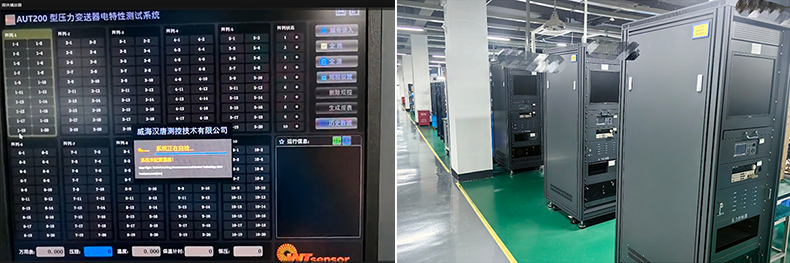
All finished products undergo testing using the:
AUT200 System
This equipment is used to verify finished-product performance indicators before shipment.
100% Inspection Requirement
A critical feature of the process is:
100% Finished Product Testing
Every unit is tested before leaving the factory.
No sampling method is used at this stage.
Quality Objectives
Finished-product testing verifies:
Functional performance
Electrical output characteristics
Product compliance
Shipment readiness
Benefits of 100% Testing
This approach provides:
Reduced shipment risk
Improved batch consistency
Increased customer confidence
Early defect detection
The AUT200 System serves as the final quality gate before products enter customer supply chains.
Quality-Control System
Manufacturing quality is not created during final testing alone. It is built through multiple inspection layers throughout production.
Incoming Material Inspection
Before production begins, incoming materials are verified to ensure conformity with engineering requirements.
Inspection focuses on:
Component specifications
Material consistency
Supplier quality status
Defective materials are isolated before entering production.
First Article Inspection (FAI)
When new production runs begin, First Article Inspection verifies:
Assembly conformity
Process readiness
Product specifications
FAI helps prevent batch-wide defects.
Self-Inspection
Operators perform self-inspections during:
Laser labeling
Assembly operations
Calibration procedures
Immediate verification reduces defect propagation.
Process Inspection
Process inspections evaluate:
Assembly quality
Calibration compliance
Process execution consistency
Quality personnel verify adherence to manufacturing requirements.
Patrol Inspection
Patrol inspections are conducted throughout production to identify:
Process deviations
Equipment abnormalities
Operator errors
These inspections provide real-time quality oversight.
Final Inspection
Final inspection includes:
AUT200 System verification
Finished product review
Shipment authorization
Only qualified products proceed to packaging and delivery.
Calibration and Testing Procedures
Calibration and testing provide objective evidence that a transmitter meets specification requirements.
Calibration Workflow
The calibration sequence includes:
Product connection
Pressure application
Pressure stabilization
5-second stabilization waiting period
Data acquisition
Parameter adjustment
Performance verification
Calibration Controls
Key controls include:
Stable pressure conditions
Controlled data collection timing
Circuit-based calibration methods
Performance parameter verification
Finished Product Testing Workflow
After assembly completion:
Product enters AUT200 System
Performance indicators are tested
Results are recorded
Qualified products are released
Traceable Quality Records
Testing records are linked to:
Product identification
Production batches
Manufacturing history
This creates a complete quality trail for future analysis.
Common Production Risks and Preventive Measures
Sensor Drift
Risk
Output values gradually shift over time.
Prevention
Stable calibration procedures
Controlled data acquisition
Finished-product verification
Calibration Deviation
Risk
Incorrect calibration results cause measurement inaccuracies.
Prevention
Pressure stabilization before measurement
5-second waiting requirement
Parameter verification
Welding Defects
Risk
Poor electrical connections affect signal stability.
Prevention
Amplifier board inspection
Welding quality verification during front-end assembly
Assembly Errors
Risk
Incorrect component installation impacts product functionality.
Prevention
Assembly checkpoints
Wire-length verification
Self-inspection procedures
Traceability Gaps
Risk
Production history cannot be reconstructed during investigations.
Prevention
Unique laser labeling
Batch identification records
Production documentation
Batch Variation
Risk
Different production batches perform inconsistently.
Prevention
Standardized assembly procedures
Controlled calibration methods
100% finished-product testing
Traceability and Production Records
Traceability is an essential requirement for OEM and industrial customers.
Each transmitter receives a unique laser-marked identification that links to:
Production batch records
Assembly records
Calibration data
Testing results
Inspection history
When quality investigations are required, engineering teams can quickly review the product's manufacturing history and identify potential root causes.
This traceability framework supports:
Corrective actions
Preventive actions
Customer audits
Supplier qualification programs
What OEM and ODM Customers Care About
OEM and ODM buyers typically focus on more than sensor specifications.
They evaluate whether manufacturing systems can consistently deliver reliable products over long production cycles.
The production workflow described above supports:
Product Consistency
Standardized assembly and calibration procedures reduce variation.
Qualification Rates
Multiple inspection checkpoints help prevent defects from progressing downstream.
Warranty Risk Reduction
100% finished-product testing lowers the probability of defective shipments.
Lower Maintenance Costs
Accurate calibration and controlled assembly improve field reliability.
Supply Stability
Traceable manufacturing records simplify quality management across repeated orders.
For engineering teams evaluating supplier capabilities, our Piezoresistive Sensor Technology Center, OEM Customization Services, and Pressure Sensor Manufacturing Guide provide additional technical references.
Continuous Improvement and Manufacturing Optimization
Manufacturing excellence requires continuous monitoring and improvement.
Our engineering teams regularly evaluate:
Production yield rates
Calibration consistency
Assembly efficiency
Testing performance
Defect trends
Root-cause analysis is performed whenever abnormal quality events occur.
Corrective actions may include:
Process revisions
Operator retraining
Inspection enhancements
Equipment optimization
Preventive actions focus on eliminating recurring risks before they affect future production.
The objective is not only to detect defects but to prevent them from occurring.

FAQ
1. Why is pressure stabilization required before calibration?
Pressure fluctuations can introduce measurement errors. Waiting for stable pressure and maintaining it for 5 seconds before data acquisition improves calibration consistency.
2. What is the purpose of laser labeling?
Laser labeling provides unique product identification and supports full production traceability.
3. Why is amplifier board welding inspected during front-end assembly?
Welding quality directly affects signal transmission reliability and long-term product stability.
4. How does 100% finished-product testing differ from sampling inspection?
Every unit is tested using the AUT200 System before shipment, eliminating the uncertainty associated with sample-based inspection.
5. What role does traceability play in OEM manufacturing?
Traceability enables rapid investigation of quality issues and supports customer audit requirements.
6. Why is wire-length verification performed during rear-end assembly?
Wire length must match parameter-table requirements to ensure assembly conformity and configuration accuracy.
7. How are calibration records linked to finished products?
Calibration results are associated with each product's unique identification code and production records.
8. What production risks can affect transmitter reliability?
Common risks include welding defects, calibration deviation, assembly errors, sensor drift, and batch variation.
9. How does self-inspection improve manufacturing quality?
Operators identify issues immediately, preventing defects from moving to subsequent production stages.
10. Why is the AUT200 System important?
The AUT200 System serves as the final verification platform for finished-product performance before shipment.
-
PCM50 Current Output Core: Compact 4–20mA Pressure Sensor Solution for Industrial Automation
Read More > - Read More >
- Read More >
-
PC90D Monocrystalline Silicon Differential Pressure Sensor for High-Accuracy Industrial Measurement
Read More > -
PCM303D General Pressure Transmitter for Industrial Monitoring
Read More > -
How Piezoresistive Pressure Sensors Are Manufactured
Read More >