 Pусский
Inside Differential Pressure Sensor Core Manufacturing: From Gold Wire Bonding to Final Protection
From: Issued date 2026.07.01 Back
A Differential Pressure Sensor Core Can Fail Before It Ever Leaves the Factory
A differential pressure sensor core may pass initial electrical testing and still develop reliability problems later in service if critical manufacturing controls are not properly implemented. During quality investigations, we often find that long-term performance issues rarely originate from a single component. Instead, they are usually linked to bonding strength, welding quality, sealing performance, signal transmission integrity, or environmental protection during production.
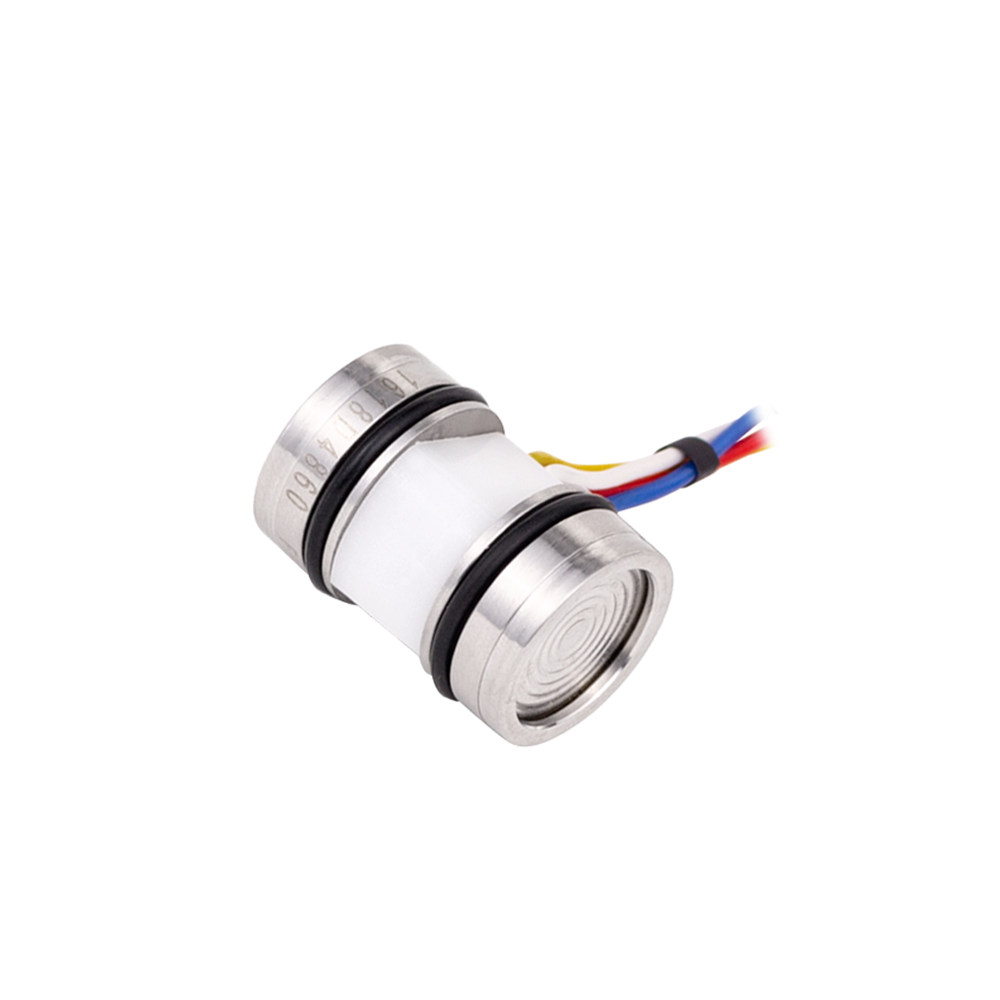
For OEM and industrial customers, the performance of a differential pressure transmitter begins with the quality of its sensor core. A stable differential pr essure sensor core must maintain accurate signal output, reliable sealing performance, and long-term stability under changing operating conditions.
When customers audit a sensor manufacturer, they frequently ask:
How is the sensor chip connected to the output pins?
How is sealing integrity ensured?
How is oil leakage prevented?
How is product traceability maintained?
How are defective units identified before shipment?
What inspections are performed during manufacturing?
This article explains the key manufacturing and quality-control processes we use during differential pressure sensor core manufacturing and how each process contributes to reliability, consistency, and long-term performance.
Where Most Long-Term Stability Problems Begin
Many field failures can be traced back to one of four root causes:
Weak gold wire bonding
Inadequate laser welding quality
Poor sealing after oil filling
Signal transmission defects
These risks cannot be eliminated through final testing alone. They must be controlled throughout the manufacturing process.
For this reason, every production stage includes specific inspections, documented process parameters, and quality checkpoints designed to prevent defects before they reach customers.
The Manufacturing Workflow Behind a Differential Pressure Sensor Core
The manufacturing process follows six major production stages:
Gold Wire Bonding
↓
Laser Welding
↓
Oil Filling and Steel-Ball Sealing
↓
Laser Identification Marking
↓
Lead Wire Soldering
↓
Protective Adhesive Coating
↓
Inspection and Release
Each stage contains defined process requirements, inspection activities, and traceability controls.
Process Control Point 1: Gold Wire Bonding
Connecting the Sensor Chip to the Output Pins
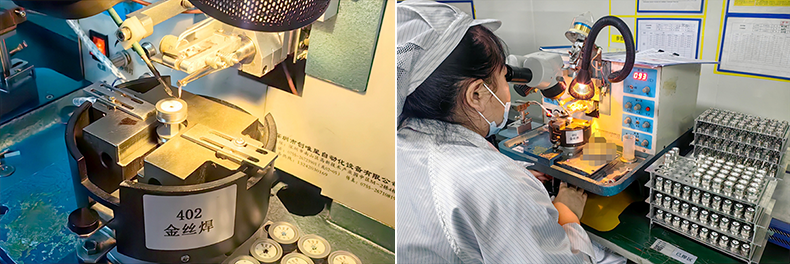
Gold wire bonding is one of the most important manufacturing stages in differential pressure sensor core production.
During this process, gold wires are used to connect the sensor chip to the output pins. This allows the electrical signal generated by the sensing element to be transmitted through the pins and into the subsequent signal-processing circuitry.
The process must be performed according to the Gold Wire Bonding Process Parameter Sheet.
Why Gold Wire Bonding Matters
A differential pressure sensor depends on stable signal transmission.
If bonding quality is compromised, the sensor may experience:
Signal interruption
Output instability
Increased resistance
Premature failure
Because of this, gold wire bonding quality directly influences product reliability.
Daily Gold Wire Pull Testing
To verify bonding strength, we perform daily gold wire pull testing.
The purpose of this test is to verify that the bonded gold wire can withstand the required pulling force without failure.
This daily verification helps identify bonding abnormalities before they affect production batches.
Quality-Control Checkpoints
We verify:
Gold wires properly connect the chip and pins.
Bonding parameters comply with the Gold Wire Bonding Process Parameter Sheet.
Daily gold wire pull testing has been completed.
The process team leader performs First Article Inspection (FAI).
Only approved products proceed to the next manufacturing stage.
Process Control Point 2: Laser Welding
Joining the Upper Ring, Diaphragm, and Sensor Core
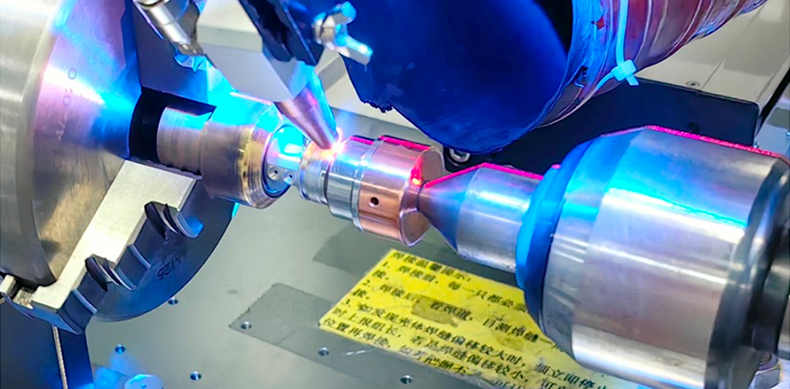
After gold wire bonding, the upper ring, diaphragm, and sensor core are joined together through laser welding.
The welding process must achieve specified welding-strength requirements while maintaining complete sealing integrity.
The process team leader performs First Article Inspection before batch production continues.
Why Laser Welding Matters
The welded assembly forms the primary pressure boundary of the differential pressure sensor core.
Any weakness in this structure may result in:
Seal leakage
Pressure transmission errors
Reduced reliability
Long-term drift
The objective is not simply joining components together. The objective is creating a stable pressure boundary capable of maintaining performance throughout the sensor's service life.
Quality-Control Checkpoints
We verify:
The upper ring, diaphragm, and sensor core are properly welded together.
Welding strength meets specified requirements.
Sealing integrity is maintained.
First Article Inspection has been completed.
Process Control Point 3: Oil Filling and Steel-Ball Sealing
Establishing a Stable Pressure Transmission System
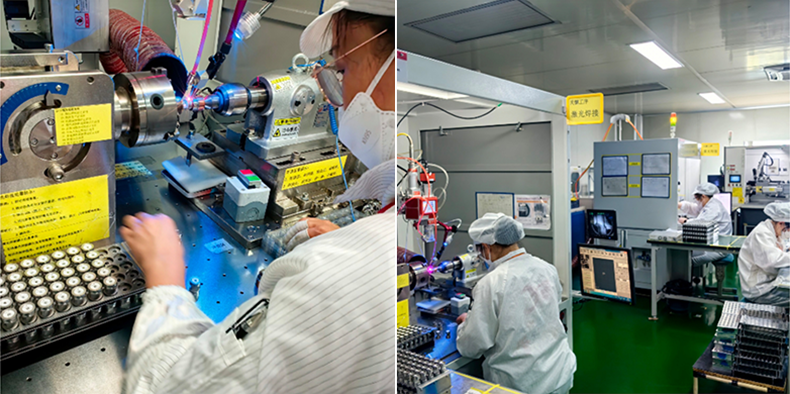
After laser welding, the sensor enters the oil-filling and sealing stage.
The steel ball and oil-filling hole are welded together to create a secure seal.
The corresponding sealing energy is selected according to the Process Parameter Record Sheet.
Why Oil Filling Matters
The fill fluid acts as the pressure transmission medium between the diaphragm and sensing element.
If oil filling or sealing quality is inadequate, the sensor may experience:
Pressure transmission errors
Output instability
Oil leakage
Reduced service life
Maintaining process consistency at this stage is essential for achieving stable sensor performance.
Daily Sealing-Column Pressure Testing
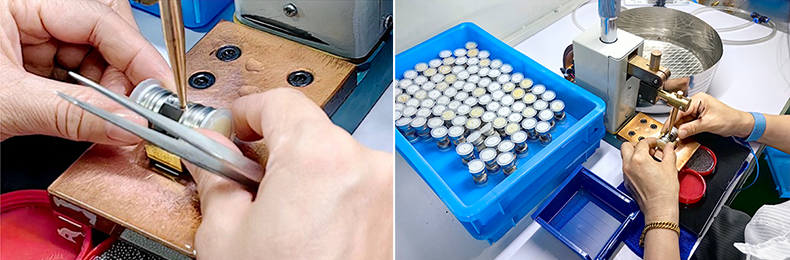
Each production team performs daily sealing-column pressure testing.
This daily test verifies sealing performance and helps identify sealing-related defects before products move forward in production.
Quality-Control Checkpoints
We verify:
The steel ball and oil-filling hole are welded together correctly.
Sealing energy matches the Process Parameter Record Sheet.
Daily sealing-column pressure testing has been completed.
The process team leader performs First Article Inspection.
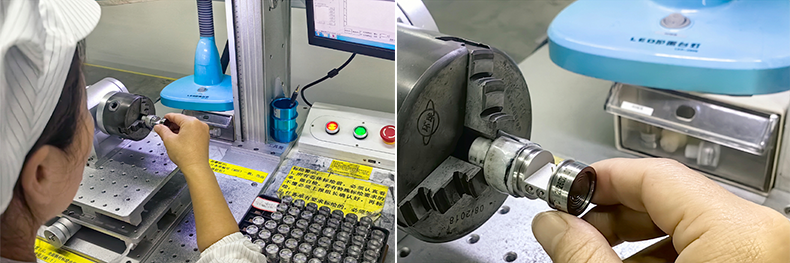
Process Control Point 4: Laser Identification Marking
Creating Product Traceability
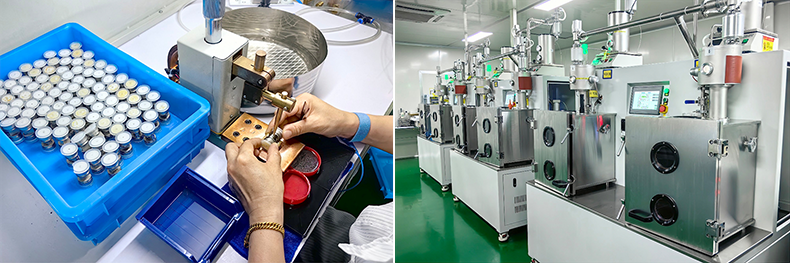
Each sensor core receives a unique identification through laser marking.
The purpose of this process is to ensure every product has a unique traceability code.
Why Traceability Matters
Traceability allows us to connect every sensor with:
Production records
Inspection records
Process data
Test results
Manufacturing history
If an issue is reported later, engineers can quickly identify the associated production information and investigate the root cause.
Self-Inspection Requirements
After laser marking, operators perform self-inspection of:
Label content
Label clarity
Marking accuracy
The process team leader performs First Article Inspection before production continues.
Quality-Control Checkpoints
We verify:
Each product receives a unique identification.
Label content is correct.
Label clarity meets requirements.
First Article Inspection has been completed.
Process Control Point 5: Lead Wire Soldering
Establishing the Signal Transmission Path
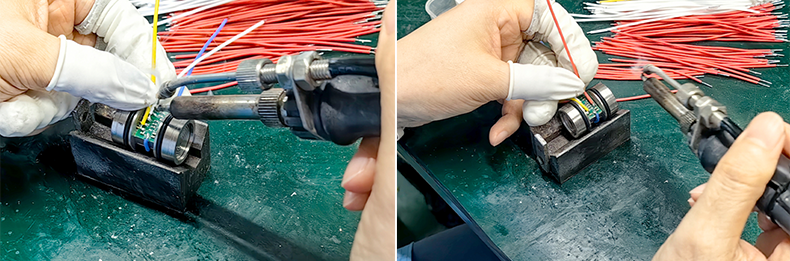
Lead wires are connected to the pins through a tin-soldering process.
This connection allows the sensor signal to be transmitted through the lead wires.
The quality of this soldering process directly influences signal transmission reliability.
Why Lead Wire Soldering Matters
Even when the sensing element performs correctly, poor solder joints can create signal-transmission problems.
Potential risks include:
Unstable output
Increased resistance
Intermittent signal loss
Reduced reliability
For this reason, solder-joint quality receives special attention during inspection.
Inspection Requirements
The process team leader inspects:
Soldering quality
Lead-wire connection quality
Lead-wire definition accuracy
First Article Inspection is also required for this process.
Quality-Control Checkpoints
We verify:
Lead wires are connected to pins through tin soldering.
Sensor signals can be transmitted through the lead wires.
Solder-joint quality meets requirements.
Lead-wire definition is correct.
First Article Inspection has been completed.
Process Control Point 6: Protective Adhesive Coating
Protecting Sensitive Components from Environmental Exposure
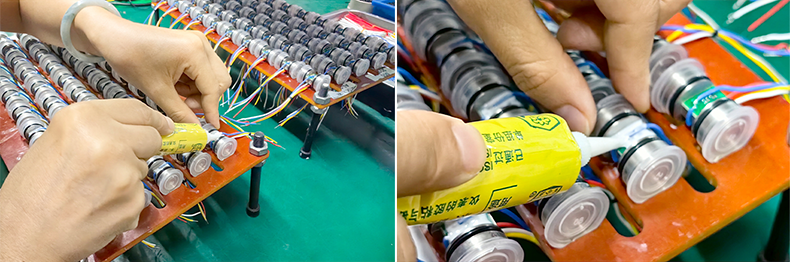
After electrical connections have been completed, moisture-resistant protective adhesive is applied.
The adhesive covers the compensation board, electronic components, and lead-wire pin connections.
The purpose of this process is to provide protective coverage for sensitive electronic components.
Why Protective Adhesive Matters
Differential pressure sensor cores may operate in environments where humidity, contamination, or external influences affect electronic stability.
Protective adhesive helps:
Reduce moisture exposure
Protect electronic components
Improve long-term reliability
Enhance environmental resistance
Daily Inspection Requirements
This process includes daily inspection activities.
Particular attention is given to ensuring that electronic components are completely covered by the protective adhesive.
Quality-Control Checkpoints
We verify:
Moisture-resistant protective adhesive has been applied correctly.
The compensation board is adequately covered.
Electronic components are fully protected.
Lead-wire pin connections are covered.
Daily inspection has been completed.
How We Prevent Leakage, Drift, and Signal Failure
Several manufacturing controls work together to improve reliability.
Leakage Prevention
We prevent leakage through:
Laser welding
Controlled oil filling
Steel-ball sealing
Process Parameter Record Sheet verification
Daily sealing-column pressure testing
Signal Stability Protection
We maintain signal integrity through:
Gold wire bonding
Daily gold wire pull testing
Tin-soldered lead-wire connections
Solder-joint inspection
Environmental Protection
We improve environmental resistance through:
Protective adhesive coating
Daily coating inspections
Complete coverage verification of electronic components
These controls help reduce the likelihood of field failures.
What OEM Buyers Should Evaluate Beyond the Datasheet
A specification sheet can describe sensor performance.
A manufacturing audit reveals how that performance is achieved.
When evaluating a differential pressure sensor core supplier, OEM and ODM customers should review:
Gold wire pull-test records
First Article Inspection records
Laser-welding controls
Sealing-column pressure-test records
Traceability procedures
Solder-joint inspection records
Daily inspection reports
Environmental-protection processes
These manufacturing controls often provide a better indication of long-term reliability than specifications alone.
Frequently Asked Questions
Why is gold wire bonding used in differential pressure sensor cores?
Gold wire bonding connects the sensor chip to the output pins, allowing sensor signals to be transmitted through the pin structure.
Why is daily gold wire pull testing necessary?
Daily gold wire pull testing verifies bonding strength and helps identify bonding abnormalities before batch production continues.
What process document controls gold wire bonding parameters?
Gold wire bonding is performed according to the Gold Wire Bonding Process Parameter Sheet.
Why is laser welding critical to sensor performance?
Laser welding joins the upper ring, diaphragm, and sensor core while ensuring required welding strength and sealing integrity.
Why is oil filling required?
Fill fluid transfers pressure from the diaphragm to the sensing element and supports stable pressure transmission.
Why is steel-ball sealing performed after oil filling?
The steel ball and oil-filling hole are welded together to create a secure seal and help prevent leakage.
What is verified during daily sealing-column pressure testing?
The test verifies sealing performance and helps identify sealing-related defects.
Why does each product receive a unique laser-marked identification?
Laser marking provides product traceability and links the sensor to manufacturing and inspection records.
Why are lead wires connected through tin soldering?
Tin soldering provides the electrical connection required for sensor signal transmission.
Why is moisture-resistant protective adhesive applied?
The adhesive protects the compensation board, electronic components, and lead-wire pin connections from environmental exposure.
- Read More >
-
PC90D Monocrystalline Silicon Differential Pressure Sensor for High-Accuracy Industrial Measurement
Read More > -
How Piezoresistive Pressure Sensors Are Manufactured
Read More > -
Key Production Processes for Seal Pressure Transmitters
Read More > -
4 Quality Control Processes for Diffused Silicon Level Transmitters
Read More > - Read More >