 Pусский
What is a Glass-to-Metal Seal? Complete Guide for Engineers
From: Issued date 2026.09.03 Back
If you work with pressure sensors, lithium batteries, vacuum systems, or semiconductor equipment, you have probably heard the term glass-to-metal seal — often abbreviated as GTMS. It is one of the most reliable ways to pass an electrical signal through a barrier while keeping gases and moisture out.
WTsensor (Nanjing Wotian Technology) has manufactured glass-to-metal seal components since 2005, and this guide reflects what we have learned across two decades of hermetic sealing for sensors, and vacuum equipment.
This guide covers what a GTMS is, how it is made, how it fails, and how to evaluate a supplier before you place an order.
What is a glass-to-metal seal?
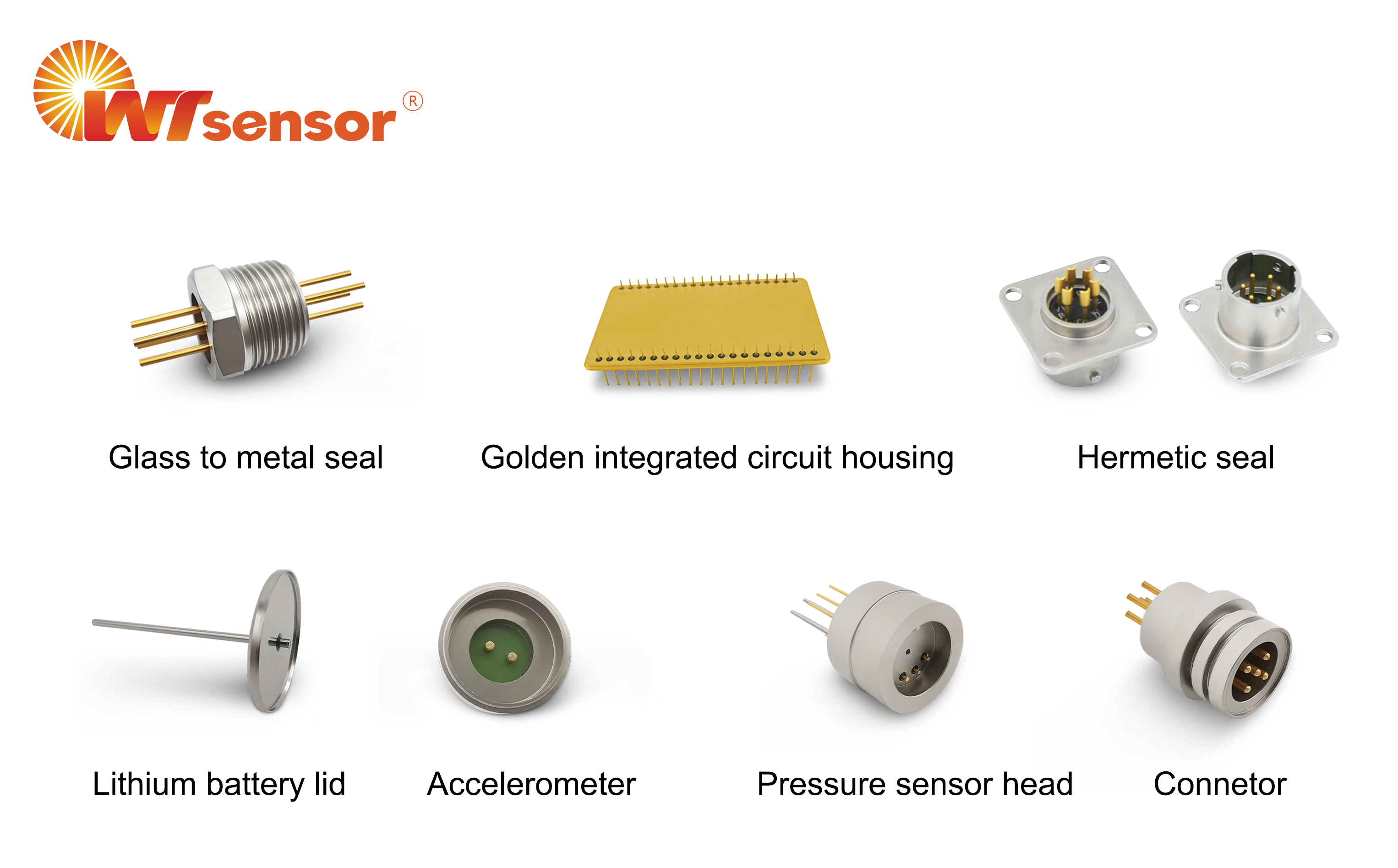
A glass-to-metal seal is a hermetic (gas-tight) joint formed by melting glass onto a metal component at high temperature. The glass fills the gap between the metal shell and the metal pin or header, and after cooling, it forms a rigid, airtight bond that blocks the passage of gas, liquid, and moisture.
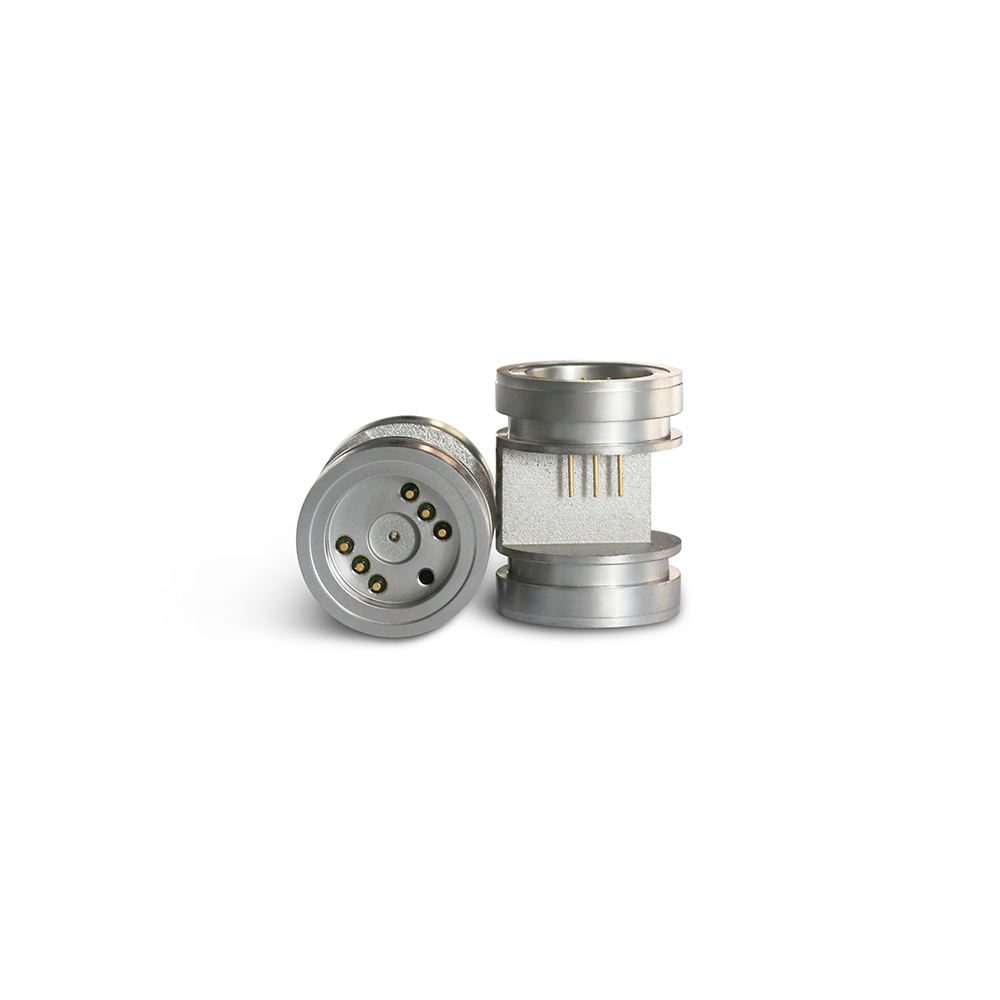
GTMS components appear in four common forms:
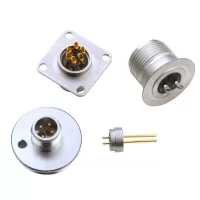
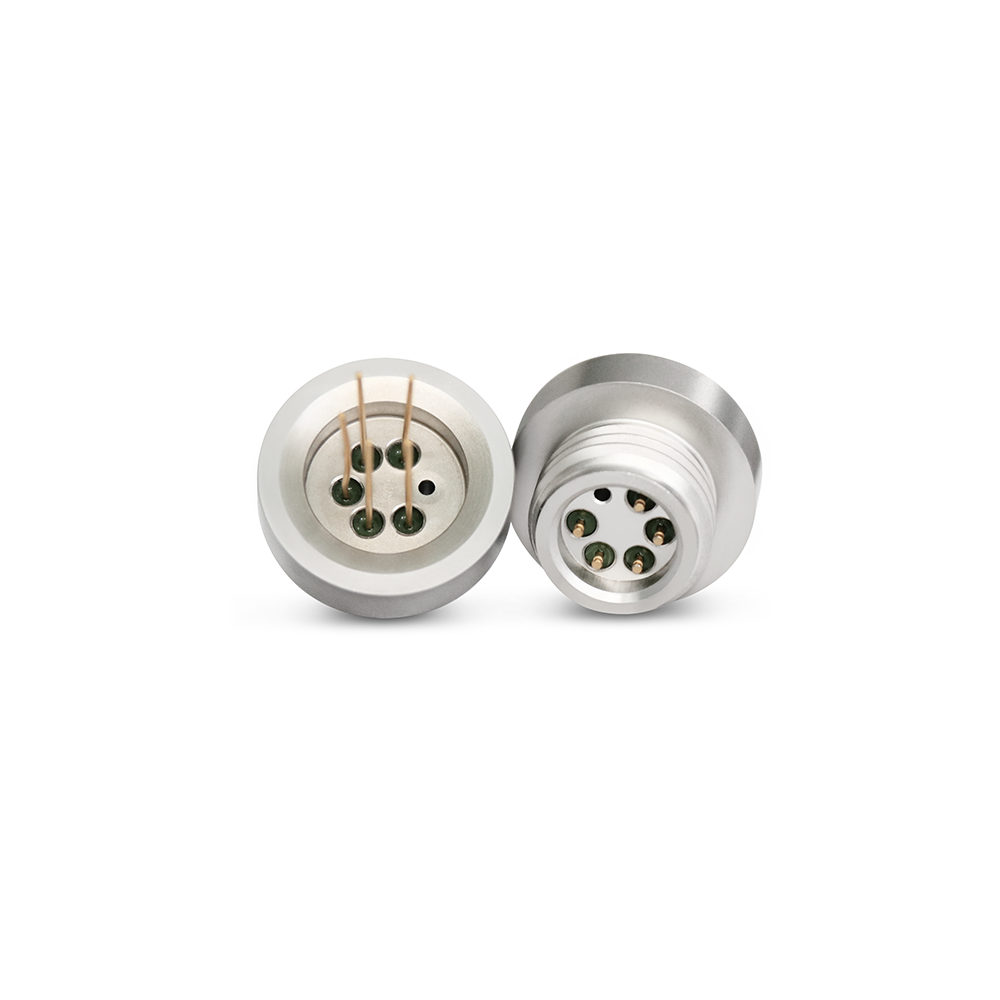
Hermetic connectors and feedthroughs — electrical pins sealed through a metal or glass body for vacuum or pressure vessels.
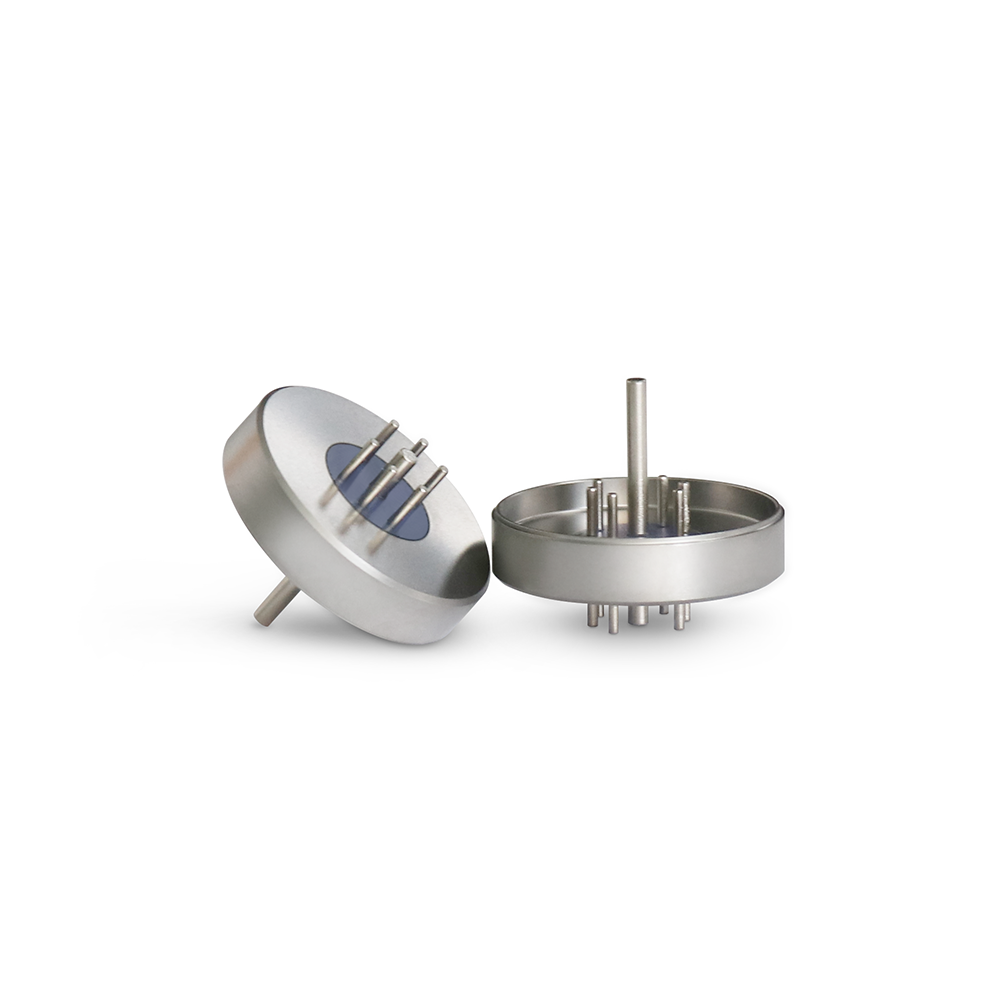
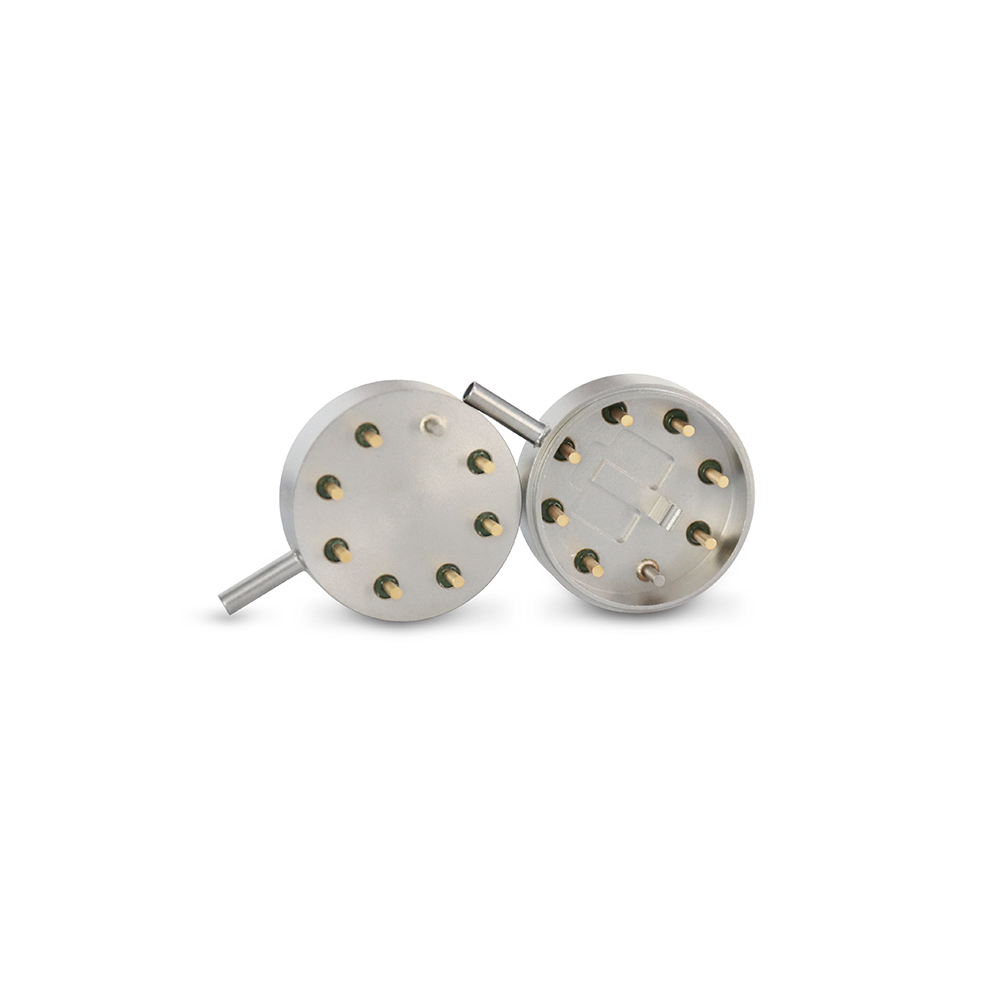
Glass sealed headers (TO headers) — base plates for semiconductor packages and sensor housings.
Lithium battery lids — hermetic seal caps for power batteries and energy storage cells.
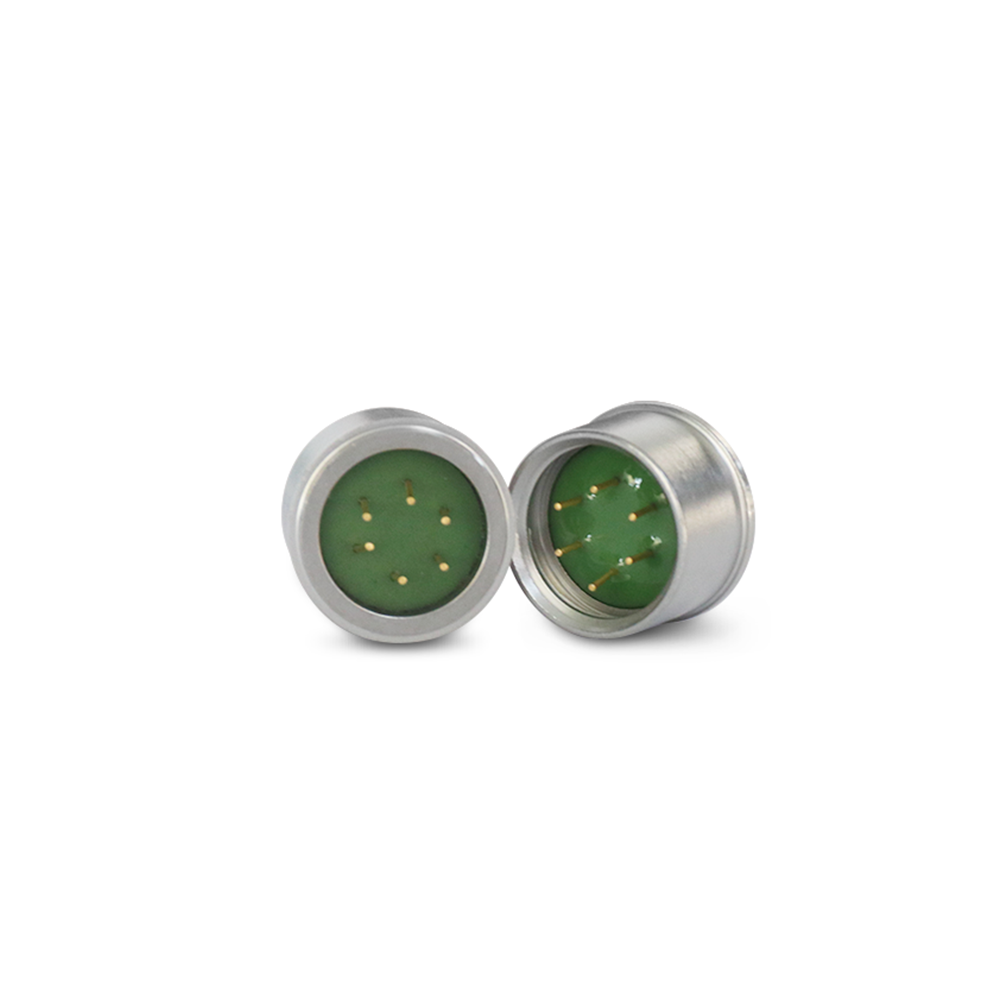
Pressure sensor heads — the metal-glass subassembly that carries electrode pins into a pressure sensor.
The defining feature of every GTMS product is the same: a permanent, leak-free interface between a metal conductor and the outside world.
How does a glass-to-metal seal work?
The seal is created by heating a glass preform together with the metal parts until the glass softens and wets the metal surface. On cooling, the glass solidifies into a rigid insulator that both seals and electrically isolates the pin from the shell.
The most important engineering requirement is thermal expansion matching. Glass and metal expand at different rates when heated. If the difference is too large, the seal cracks. That is why GTMS manufacturers use specially formulated sealing alloys with expansion coefficients close to those of the sealing glass — iron-nickel alloys are the industry standard choice.
A second factor is the surface condition of the metal parts: the metal must be clean and consistently plated so the molten glass wets it evenly. Consistent process control is what separates a seal that holds for 100,000 cycles from one that fails in the field.
Types of glass-to-metal seals
In general engineering terms, GTMS products fall into three broad categories:
Matched seals — the expansion coefficient of the glass is closely matched to the metal, producing low residual stress. Used in most precision components such as sensor headers and battery lids.
Compression seals — the metal shell is designed to compress the glass in service, allowing a wider choice of materials. Common in high-voltage feedthroughs.
Matched-compression seals — a hybrid design used for demanding applications that need both reliability and design flexibility.
Most industrial GTMS components, including battery caps and sensor headers, are built on matched-seal technology because of its long-term stability.
How are glass-to-metal seals manufactured?
Manufacturing a glass-to-metal seal is a controlled thermal process. While the exact recipe varies by product, the production sequence follows the same five stages:
1. Component preparation. The metal parts — shells, pins, and headers — are machined, cleaned, and plated. Surface cleanliness is critical here: any oil, oxide, or residue will prevent the glass from wetting the metal properly.
2. Glass preform placement. A precisely weighed glass preform (or glass powder compact) is positioned between the metal parts. The glass composition is selected to match the thermal expansion of the metal alloy.
3. Firing in a controlled furnace. The assembly is heated in a furnace — typically to 700–1,000 °C depending on the glass formulation — until the glass melts and flows into the gap between metal and pin. The heating profile (ramp rate, soak time, cooling rate) is controlled to avoid thermal shock and stress.
4. Controlled cooling and annealing. The assembly is cooled slowly through the glass transition zone so internal stresses relax. Rushing this step is one of the most common causes of micro-cracks that only appear months later in the field.
5. Verification and testing. Finished parts are electrically and mechanically tested. The decisive test is helium leak testing: the part is exposed to helium under pressure, and a mass spectrometer detector measures how much gas escapes. A true hermetic seal must hold a helium leak rate of ≤1×10⁻⁹ Pa·m³/s — the grade required for aerospace, vacuum, and battery applications.
At WTsensor, every GTMS production batch is helium-tested against this ≤1×10⁻⁹ Pa·m³/s benchmark, with insulation resistance checked at 500 V and parts qualified across the −55 °C to +125 °C operating range.
Key performance parameters to check
When evaluating a glass-to-metal seal, four parameters decide whether the part will survive your application:
| Parameter | What it means | Why it matters |
|---|---|---|
| Hermeticity (leak rate) | The amount of gas that can pass through the seal, measured in Pa·m³/s | A leak rate of ≤1×10⁻⁹ Pa·m³/s (helium-tested) is the benchmark for true hermetic sealing |
| Insulation resistance | Electrical isolation between pin and shell | ≥5,000 MΩ at 500 V ensures no signal leakage in sensor circuits |
| Operating temperature | The range over which the seal stays stable | −55 °C to +125 °C covers most industrial, automotive, and battery environments |
| Plating quality | Corrosion protection and solderability of the pins | Nickel under-plating plus gold finishing (2.54–6.35 µm Ni + 1.27–2.54 µm Au) gives reliable, long-life connections |
Additional parameters worth confirming with any supplier: pressure rating (e.g. 8 MPa), dielectric strength (e.g. 1,500 V), and insertion life (e.g. ≥500 cycles).
Common glass-to-metal seal failure causes
A glass-to-metal seal can fail years after installation — often because of decisions made during design or manufacturing. Knowing the failure mechanisms helps you specify the right part and ask the right questions of your supplier.
1. Thermal mismatch. If the expansion coefficients of the glass and metal are not properly matched, the seal develops residual stress that leads to radial cracks — sometimes immediately, sometimes after thermal cycling. Prevention: specify matched sealing alloys (iron-nickel formulations such as 4J50) and review the operating temperature range with the manufacturer.
2. Poor glass wetting. If the metal surface is contaminated, oxidized, or inconsistently plated, the molten glass does not bond properly, leaving microscopic voids along the interface. These voids may pass initial inspection but grow into leak paths under vibration or thermal cycling. Prevention: require clean, consistently plated components and ask how the manufacturer controls surface condition before firing.
3. Contamination during assembly. Foreign particles, flux residue, or moisture trapped at the interface can outgas inside a vacuum or battery environment, degrading insulation resistance over time. Prevention: verify insulation resistance testing (≥5,000 MΩ at 500 V) is performed on finished parts, not just on samples.
4. Insufficient leak testing. Sampling-based leak testing is the most dangerous cost cut in this industry. A defect rate of a few percent across tens of thousands of parts is invisible in a sample-based report but becomes a field failure for your customers. Prevention: require 100% helium leak testing with a documented ≤1×10⁻⁹ Pa·m³/s acceptance limit.
Understanding these four failure modes is the difference between buying a commodity part and buying a reliably sealed component.
Applications of glass-to-metal seals
Because a GTMS is simultaneously a mechanical seal, an electrical insulator, and a barrier against moisture and gas, it is used across industries where failure is not an option:
Lithium batteries (power & energy storage) — hermetic battery lids protect the cell chemistry from moisture, a key factor in safety and cycle life.
Pressure and level sensors — sensor heads and headers carry the electrode pins through the housing while keeping the sensing element sealed.
Vacuum and cryogenic systems — feedthroughs for LNG, liquid nitrogen, and superconducting equipment where any leak is unacceptable.
Aerospace and defense — connectors and headers that must survive extreme temperature swings and vibration.
Semiconductor equipment — glass sealed headers for packages that must stay moisture-free for years.
Glass-to-metal seal vs. organic sealing
For many products, an epoxy or organic resin seal is cheaper and easier to apply. So why choose glass?
| Factor | Glass-to-metal seal | Organic (epoxy) seal |
|---|---|---|
| Hermeticity | True hermetic (≤1×10⁻⁹ Pa·m³/s) | Permeable over time |
| Temperature range | −55 °C to +125 °C (wider possible) | Typically −40 °C to +120 °C, degrades with heat |
| Moisture resistance | Excellent | Limited |
| Long-term stability | Decades | Degrades with age, UV, and humidity |
| Radiation resistance | Excellent | Poor |
If your application requires true hermetic sealing over a long service life — batteries, sensors, vacuum equipment — a glass-to-metal seal is the technically correct choice. If a non-hermetic, low-cost seal is acceptable, an organic seal can be an alternative worth discussing.
How to choose a glass-to-metal seal manufacturer
Not every supplier of hermetic components is a true manufacturer — many are trading companies that buy and resell. Five questions separate a real manufacturing partner from a reseller:
Can they prove hermeticity? Ask for helium leak test reports. A leak rate of ≤1×10⁻⁹ Pa·m³/s, verified on 100% of production, is the benchmark for industrial GTMS parts.
What materials do they master? The combination of stainless steel (303) with iron-nickel sealing alloy (4J50) is a proven, stable pairing for matched seals.
Is plating consistent? Nickel + gold plating thickness should be specified, not improvised — it directly affects solderability and corrosion resistance.
Do they have real manufacturing scale? A manufacturer with dedicated production lines, in-house testing, and two decades of experience is a different risk profile from a trading company.
Can they manufacture to your drawings? A custom hermetic seal supplier should accept customer drawings, review them for manufacturability, and return a technical evaluation — not a price list.
WTsensor manufactures glass-to-metal seals, hermetic connectors, lithium battery lids, and pressure sensor heads in a 25,000 m² production base, with helium-tested hermeticity of ≤1×10⁻⁹ Pa·m³/s and an 18-month warranty on every part.
FAQ
What is the leak rate of a glass-to-metal seal? A quality industrial GTMS achieves a helium leak rate of ≤1×10⁻⁹ Pa·m³/s — this is considered a true hermetic seal.
What temperature range can a glass-to-metal seal withstand? Standard GTMS components operate from −55 °C to +125 °C, which covers most industrial, automotive, and battery applications.
Why are lithium battery lids sealed with glass? Glass sealing keeps moisture out of the cell for the life of the battery, which is critical for safety, capacity retention, and cycle life.
What is the difference between a hermetic connector and a feedthrough? Functionally the same — both carry electrical signals through a sealed barrier. "Feedthrough" is more common in vacuum and pressure vessel contexts; "hermetic connector" in industrial and defense electronics.
Can glass-to-metal seals be used in vacuum applications? Yes. With a leak rate of ≤1×10⁻⁹ Pa·m³/s, GTMS feedthroughs are standard components in vacuum systems, cryogenic equipment (LNG, liquid nitrogen), and semiconductor tools.
How long does a glass-to-metal seal last? Because glass does not age or degrade like organic materials, a well-manufactured GTMS can last for decades — the limiting factor is usually the plating and the surrounding assembly, not the seal itself.
Can you manufacture custom glass-to-metal seals according to drawings? Yes. We manufacture OEM glass-to-metal seal components from customer drawings, including custom dimensions, materials, and plating specifications. Send us your drawing and our engineers will review manufacturability before quoting.
What information is required for a GTMS quotation? To quote accurately, we need: a drawing or detailed dimensions, the required material (or application environment), target leak rate, operating temperature range, plating requirements, and estimated annual quantity. With these, we can confirm feasibility and provide pricing.
Do you provide OEM sealing solutions? Yes. As a glass-to-metal seal manufacturer with in-house production and testing, we support OEM projects from drawing review to volume delivery, including battery lids, sensor headers, and hermetic feedthroughs.

-
How Piezoresistive Pressure Sensors Are Manufactured
Read More > -
Key Production Processes for Seal Pressure Transmitters
Read More > -
4 Quality Control Processes for Diffused Silicon Level Transmitters
Read More > -
Inside Differential Pressure Sensor Core Manufacturing: From Gold Wire Bonding to Final Protection
Read More > -
How Welded Pressure Transmitters Prevent Leakage Before Calibration
Read More >