 Pусский
How Welded Pressure Transmitters Prevent Leakage Before Calibration
From: Issued date 2026.07.15 Back
Inside Our Welded Pressure Transmitter Factory: How We Build Reliability Before Calibration Begins
Every Reliable Pressure Transmitter Starts With a Weld, Not a Calibration
The first transmitter entering our welding station each morning looks no different from the hundreds that will follow. At this point, there is no circuit board, no calibration record, and no performance report—only a housing, a pressure port, and a production drawing waiting to become a finished product.
Many people assume calibration determines whether a pressure transmitter is accurate. Our production engineers see it differently.
A transmitter with poor sealing can never become a reliable product, no matter how precisely it is calibrated later. That is why our manufacturing team treats welding as the first quality gate rather than simply another production step.
Before any electronic assembly begins, every welded pressure transmitter passes through a controlled sequence that includes argon arc welding, 100% leak testing, front-end assembly, and output calibration using our compensation system. Each operation removes one potential failure before the next process starts.
If you would like to compare this manufacturing workflow with our product specifications, you can Download Our Pressure Transmitter Datasheet or Take a Tour of Our Manufacturing Facility.
Why Sealing Quality Matters More Than Most People Expect
Customers usually evaluate a pressure transmitter by looking at accuracy specifications, output signals, or pressure ranges.
Inside the factory, however, reliability starts much earlier.
A microscopic leak created during welding may not appear during the first electrical test. It may only become visible after thousands of pressure cycles in actual service. Once internal sealing has been compromised, calibration cannot restore the product's long-term performance.
This is why our production workflow focuses on preventing defects instead of correcting them later.
Manufacturing Timeline: Four Quality Gates Before Shipment
Every welded pressure transmitter follows four controlled production stages:
Step 1 — Argon Arc Welding
↓
Step 2 — 100% Leak Testing
↓
Step 3 — Front-End Assembly
↓
Step 4 — Output Calibration Using the Compensation System
Only after one stage has been verified can the product move to the next.
The First Quality Gate: Argon Arc Welding Creates the Pressure Boundary
Step 1 — Welding the Housing and Pressure Port
The manufacturing process begins by joining the housing and the pressure inlet through an argon arc welding process.
This welded joint forms the primary pressure boundary of the transmitter and must withstand long-term pressure loading without leakage.
Our welding process is designed to achieve a welding strength of 300% Full Scale (300% FS) while maintaining complete sealing integrity.
Meeting the specified welding strength alone is not enough. The weld must also remain fully sealed to prevent pressure loss during future operation.
What We Verify
The housing and pressure inlet are correctly joined through argon arc welding.
Welding strength reaches 300% FS.
The welded joint provides complete sealing performance.
Factory Observation
Experienced welders understand that a clean-looking weld does not automatically indicate a reliable seal. Visual appearance is only one part of the inspection. Structural strength and sealing performance are equally important before production continues.
Learn more in our Pressure Sensor Manufacturing .
The Second Quality Gate: Every Weld Undergoes 100% Leak Testing
Step 2 — Leak Testing Without Sampling
Many factories rely on sampling inspection.
We choose a different approach.
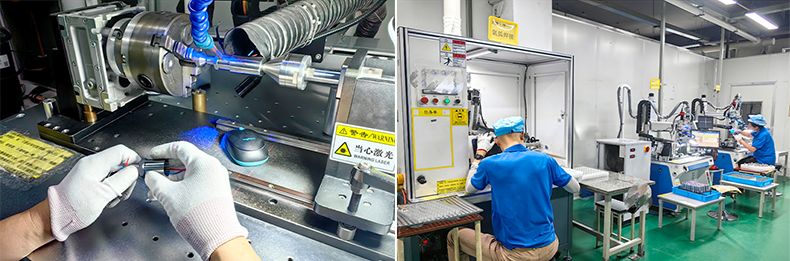
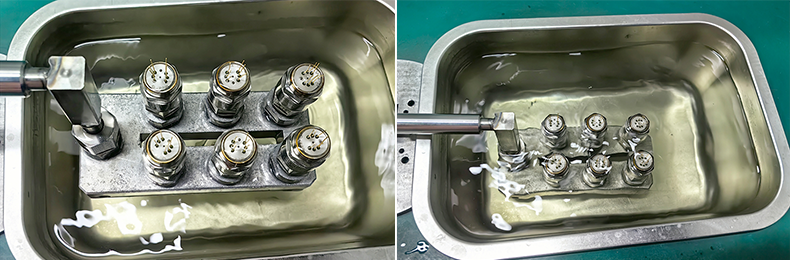
After welding, 100% of welded assemblies undergo leak testing before entering the assembly process.
Every welded joint is inspected individually to verify sealing integrity.
By performing leak testing immediately after welding, defects can be identified before electronic components are installed, reducing unnecessary rework and protecting production efficiency.
What We Verify
Every welded assembly receives 100% leak testing.
Weld sealing meets production requirements.
Products failing the leak test are isolated before entering the next manufacturing stage.
Factory Observation
Leak testing is one of the most valuable preventive inspections in our production process. Finding a sealing defect before assembly saves time, protects material costs, and prevents hidden quality risks from reaching later production stages.
The Third Quality Gate: Electronics Are Installed Only After Sealing Is Confirmed
Step 3 — Front-End Assembly
Once leak testing confirms the welded structure is fully sealed, the transmitter enters front-end assembly.
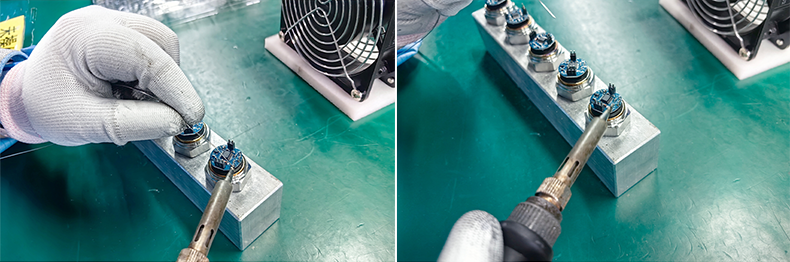
During this process, the main circuit board is installed onto the product.
Operators also verify the welding quality between the main board and the assembly to ensure the electrical connection meets production requirements.
Only products with qualified sealing proceed to electronic assembly, helping maintain manufacturing consistency across every production batch.
What We Verify
The main circuit board has been correctly assembled.
Operators verify the welding quality between the circuit board and the product.
Assembly quality complies with internal production requirements.
Production Insight
Separating leak testing from electronic assembly is intentional. Installing electronic components before confirming sealing integrity increases both production cost and repair complexity if defects are later discovered.
Internal Link Opportunity: Explore our OEM & ODM Pressure Transmitter Manufacturing Services.
The Final Quality Gate: Calibration Confirms Stable Output
Step 4 — Output Calibration Using the Compensation System
After mechanical assembly has been completed, the transmitter proceeds to output calibration.
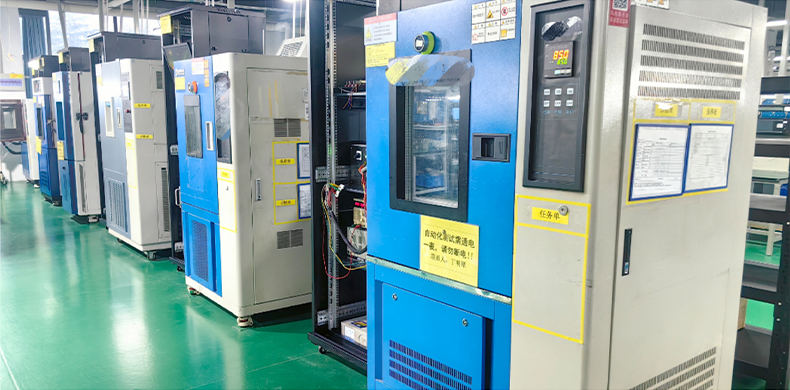
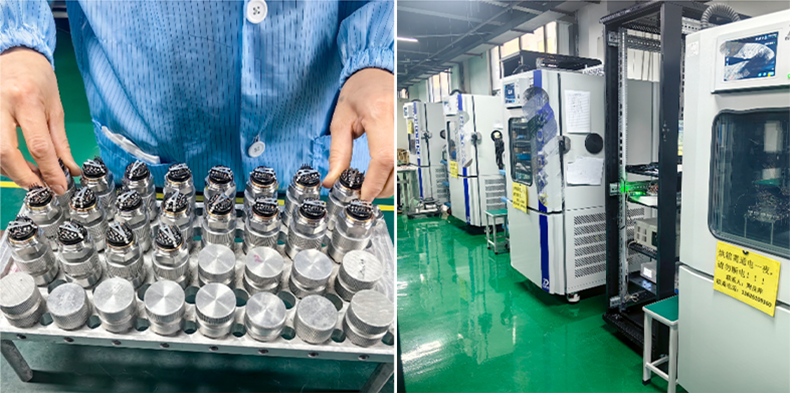
Our production team uses the compensation system to perform output calibration, ensuring that the electrical output meets the required performance specifications before shipment.
Calibration is not intended to compensate for poor manufacturing quality.
Instead, it verifies the performance of a product that has already passed welding, leak testing, and assembly inspections.
What We Verify
Output calibration is completed using the compensation system.
Electrical output satisfies internal acceptance requirements before shipment.
Engineering Perspective
Calibration confirms product performance—it does not repair leakage, weak welds, or assembly defects. Stable measurement begins with reliable manufacturing processes long before the calibration station.
Learn more about our Pressure Transmitter Calibration Process.
Manufacturing Quality Is Built Before Final Testing
A reliable welded pressure transmitter is not created by one inspection or one calibration procedure.
It is built through disciplined manufacturing practices applied in the correct order.
Argon arc welding establishes the pressure boundary. 100% leak testing verifies sealing integrity. Front-end assembly completes the electronic structure. Output calibration confirms that the finished product performs as intended.
Each stage eliminates one category of manufacturing risk before the next begins.
For OEM customers and industrial users, this process provides confidence that every welded pressure transmitter has been produced under repeatable, traceable, and verifiable manufacturing controls rather than relying solely on final inspection.
To learn more, you can Browse All Pressure Sensors and Pressure Transmitters, View Our ISO and Industry Certifications, or Contact Our Engineering Team to discuss your application requirements.

-
PCM303D General Pressure Transmitter for Industrial Monitoring
Read More > -
Key Production Processes for Seal Pressure Transmitters
Read More > -
4 Quality Control Processes for Diffused Silicon Level Transmitters
Read More > - Read More >
-
Inside Differential Pressure Sensor Core Manufacturing: From Gold Wire Bonding to Final Protection
Read More > -
How Threaded Pressure Sensor Cores Prevent Leakage Through Controlled Manufacturing
Read More >