 Pусский
Inside RTD Temperature Sensor Manufacturing Process
From: Issued date 2026.06.12 Back
Introduction
A temperature probe may pass an initial resistance check yet still fail months later in the field. In our production experience, failures are often traced back to manufacturing details rather than the RTD sensing element itself.
A weak lead-wire connection, incomplete powder filling, poor welding consistency, or missing traceability information can all affect long-term performance.
For OEM buyers, quality managers, and industrial distributors, understanding how a temperature sensor is manufactured is just as important as reviewing the datasheet. They want to understand how product consistency is maintained, how defects are prevented, and what testing procedures are completed before shipment.
This article explains the complete RTD sensor production process used in our factory and highlights the quality-control checkpoints that help ensure reliable performance for PT100 and PT1000 temperature sensors.
Why Temperature Sensor Quality Control Matters
Industrial RTD temperature sensors are often installed in demanding environments where downtime is costly and maintenance access is limited.
A seemingly minor manufacturing defect can eventually lead to:
Sensor drift
Signal instability
Open-circuit failures
Reduced thermal response
Mechanical damage
Batch-to-batch inconsistency
For this reason, Temperature Sensor Quality Control must be implemented throughout the entire manufacturing process rather than relying solely on final inspection.
Each manufacturing step contributes directly to measurement accuracy, long-term stability, and product reliability.
Overview of the RTD Sensor Production Process
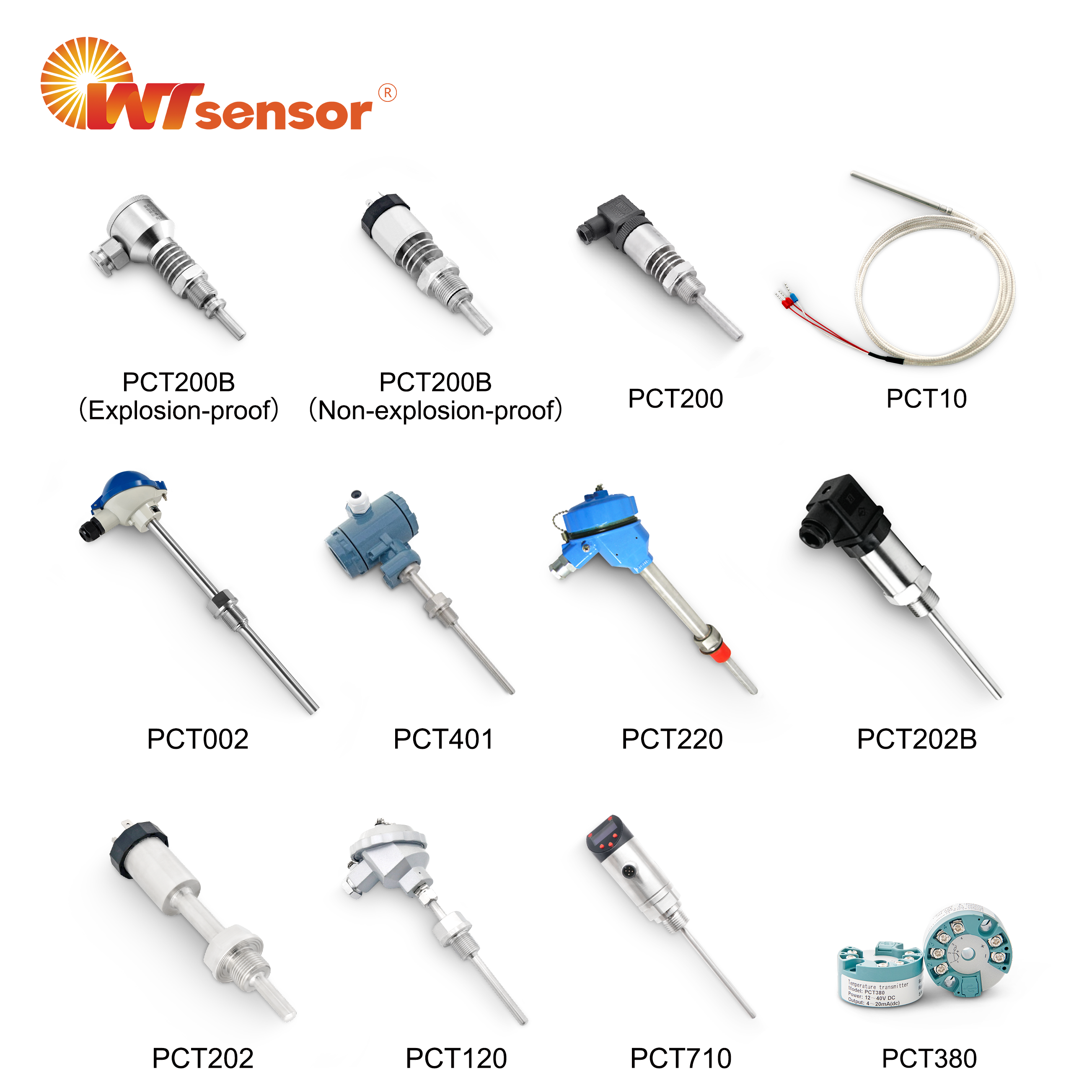
The manufacturing workflow consists of six primary stages:
Resistance Wire Crimping
Argon Arc Welding
Powder Filling
Assembly
Laser Marking
Finished Product Testing
Production Flow:
Resistance Element Installation → Argon Arc Welding → Powder Filling → Hirschmann Connector Assembly → Laser Traceability Marking → 100% Finished Product Testing → Shipment
Each stage contains dedicated inspection and verification activities before products move to the next process.
Detailed Production Process of RTD Temperature Sensors
Step 1: Resistance Wire Crimping
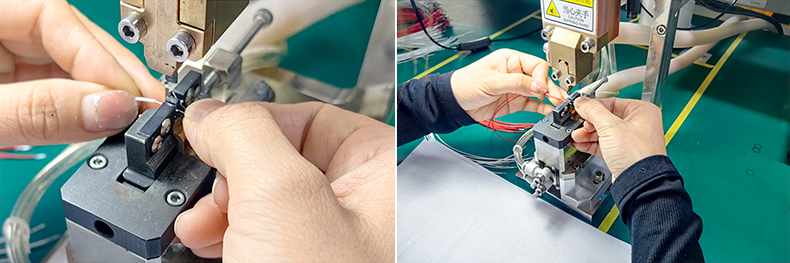
The manufacturing process begins with connecting the resistance element to the lead wires.
Process Requirements
The resistance element is welded onto the lead wires.
The welded connection undergoes a pull test.
The connection must not break during the pull test.
Why This Step Matters
The connection between the sensing element and lead wire directly affects electrical continuity and long-term reliability.
A weak connection may fail during transportation, installation, vibration exposure, or extended operation.
Quality Control Checkpoint
Our production team performs pull-force verification on welded connections before the sensor proceeds to the next manufacturing stage.
This process helps eliminate hidden reliability risks early in production.
Step 2: Argon Arc Welding
After lead-wire verification, the sensor enters the argon arc welding process.
Process Requirements
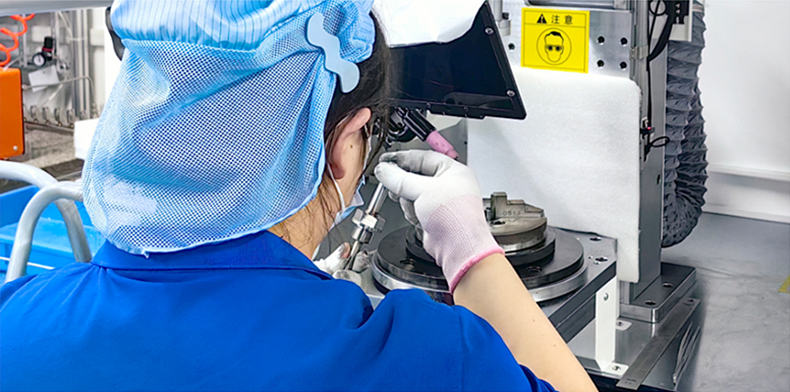
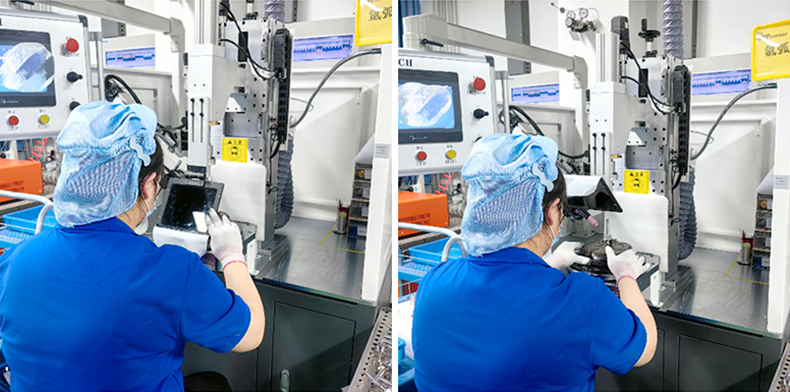
The temperature-sensing element is welded into the probe head.
Argon arc welding technology is used.
Welding parameters are controlled according to the Process Parameter Record Sheet.
Why This Step Matters
The weld serves as both a mechanical support structure and a thermal transfer pathway.
Poor welding quality may result in:
Structural weakness
Inconsistent heat transfer
Sensor instability
Reduced service life
Quality Control Checkpoint
Operators verify welding parameters according to the Process Parameter Record Sheet and inspect weld consistency before releasing products to the next process.
Step 3: Powder Filling
Following welding, the temperature probe enters the powder-filling process.
Process Requirements
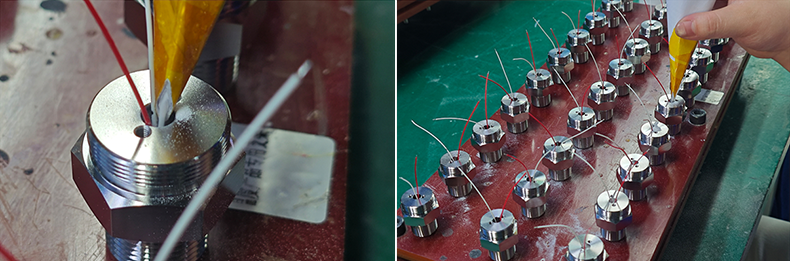
Aluminum oxide powder is filled into the probe interior.
The probe is placed on a vibration platform.
Vibration is performed twice.
Operators visually verify complete powder filling.
Why This Step Matters
Aluminum oxide powder provides:
Electrical insulation
Thermal conductivity
Mechanical support
Internal stability
Insufficient filling can create internal voids that negatively affect thermal response and measurement consistency.
Quality Control Checkpoint
After vibration is completed twice, operators visually inspect the probe to verify that the aluminum oxide powder has completely filled the internal cavity.
Take a Tour of Our Manufacturing Facility
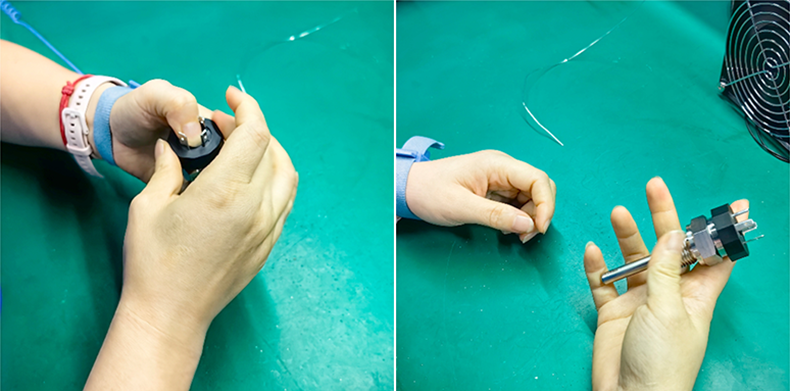
Step 4: Assembly
After powder filling, the sensor enters final assembly.
Process Requirements
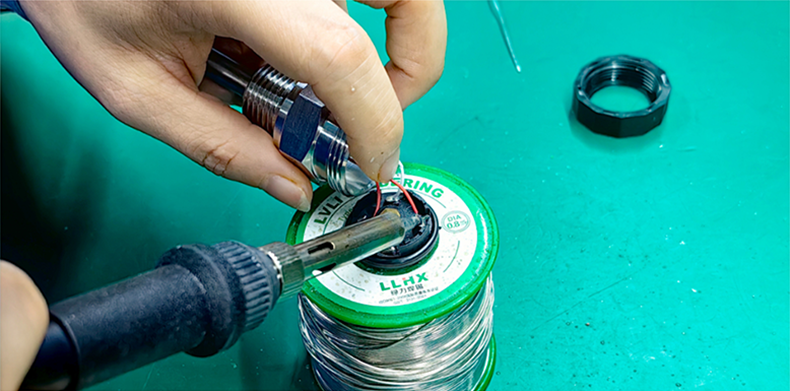
Install the Hirschmann connector.
Why This Step Matters
The Hirschmann connector serves as the electrical interface between the RTD sensor and the customer's control system.
Proper installation ensures:
Stable signal transmission
Reliable field installation
Mechanical integrity
Long-term durability
Quality Control Checkpoint
Assembly personnel verify correct connector installation before products proceed to laser marking.
Step 5: Laser Marking
Traceability is a critical requirement for OEM and industrial customers.
Process Requirements
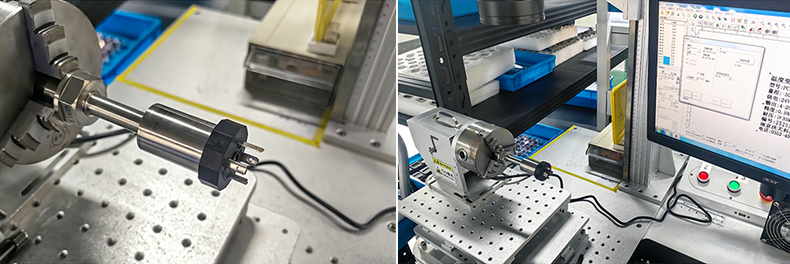
Laser marking is performed to create a unique identification for every product.
Operators conduct self-inspection of marking content.
Operators verify marking clarity.
The process team leader performs first-piece inspection.
Why This Step Matters
Laser marking allows every sensor to be linked directly to production and inspection records.
Benefits include:
Batch tracking
Product traceability
Manufacturing history identification
Faster root-cause analysis
Quality Control Checkpoint
Three verification activities are completed:
Marking content inspection
Marking clarity inspection
First-piece inspection by the process team leader
Step 6: Finished Product Testing
Finished product testing is the final manufacturing stage before shipment.
Process Requirements
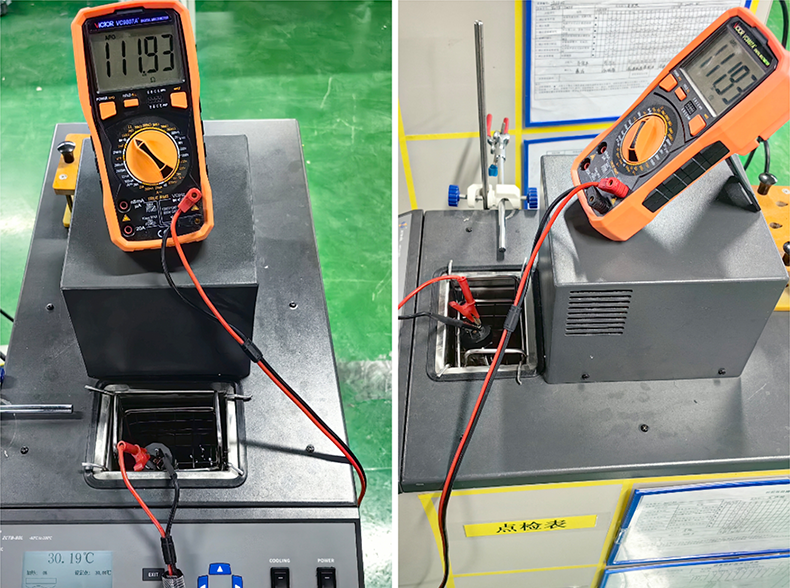
100% finished product indicator testing is performed before shipment.
No sampling inspection is used.
Every manufactured sensor is tested.
Why This Step Matters
Testing every sensor helps identify:
Output abnormalities
Electrical defects
Assembly-related issues
Product nonconformities
Quality Control Checkpoint
Each sensor must successfully pass finished product testing before shipment approval is granted.
This 100% testing strategy significantly reduces the possibility of defective products reaching customers.
Quality-Control System Throughout Production
Incoming Material Inspection
Incoming materials are inspected before entering production.
Verification includes:
Material conformity
Component specifications
Visual condition
Documentation review
Only qualified materials are released to production.
First Article Inspection (FAI)
Before batch production begins, First Article Inspection is performed to verify process readiness and product conformity.
This step helps identify setup errors before large-scale manufacturing starts.
Self-Inspection
Operators perform self-inspections throughout production.
Examples include:
Laser marking verification
Powder-filling verification
Assembly verification
This allows problems to be identified immediately at the workstation level.
Process Inspection
Quality personnel inspect critical manufacturing stages, including:
Resistance wire crimping
Argon arc welding
Powder filling
Assembly operations
Patrol Inspection
Patrol inspections are conducted periodically during production.
Inspectors verify:
Process compliance
Operator performance
Documentation accuracy
Product consistency
Final Inspection
Final inspection confirms:
Production completion
Traceability compliance
Testing completion
Shipment approval status
Only approved products are released for shipment.
Calibration and Testing Procedures
Accurate temperature measurement requires more than proper assembly. Testing and verification activities are also essential.
Our testing workflow includes:
Lead-wire pull testing
Welding quality verification
Powder-filling inspection
Assembly verification
Laser marking verification
100% finished product testing
Associated production records may include:
Product identification number
Batch information
Inspection records
Test records
Traceability information
These records support quality investigations and continuous improvement activities.
Common Production Risks and Preventive Measures
Lead Wire Failure
Risk:
Weak lead-wire connections may result in open circuits.
Preventive Measure:
Pull testing after resistance welding.
Welding Defects
Risk:
Poor weld quality can reduce structural strength and reliability.
Preventive Measure:
Argon arc welding controlled according to the Process Parameter Record Sheet.
Incomplete Powder Filling
Risk:
Internal voids may reduce thermal conductivity and measurement consistency.
Preventive Measure:
Double vibration and visual filling verification.
Assembly Errors
Risk:
Incorrect connector installation may affect field performance.
Preventive Measure:
Assembly verification before product release.
Traceability Failure
Risk:
Products cannot be linked to production records.
Preventive Measure:
Unique laser identification for every sensor.
Batch Variation
Risk:
Performance inconsistency between production lots.
Preventive Measure:
Standardized manufacturing procedures and 100% finished product testing.
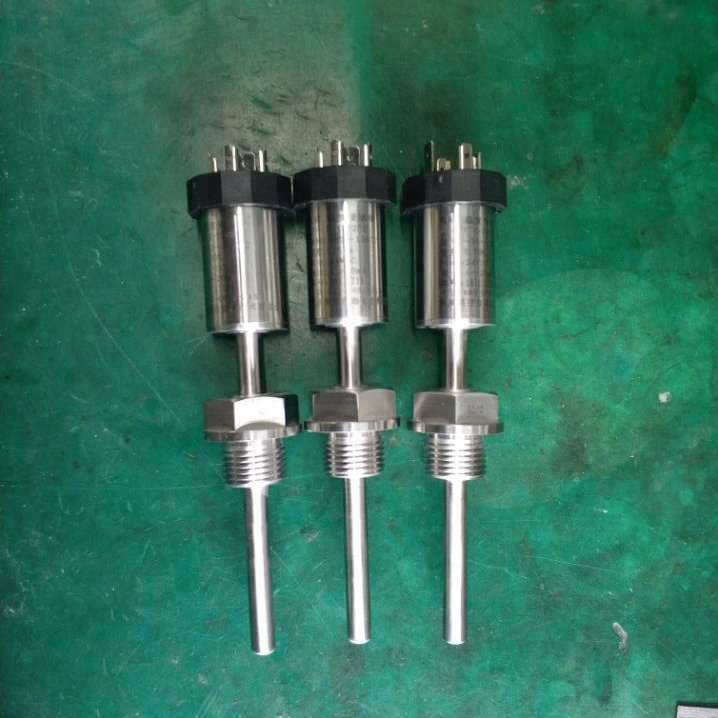
Traceability and Production Records
Traceability supports both quality assurance and customer confidence.
Each sensor receives a unique laser-marked identification number.
Associated records may include:
Production batch records
Process records
Inspection reports
Test records
Shipment records
This traceability system allows rapid investigation when quality concerns arise and supports effective corrective-action implementation.
What OEM and ODM Customers Care About
Product Consistency
Stable production processes reduce batch-to-batch variation.
Qualification Rates
Early defect detection improves production yield and reduces rework.
Warranty Risk
Effective process controls help reduce field failures and warranty claims.
Maintenance Costs
Reliable sensors reduce replacement frequency and maintenance requirements.
Long-Term Reliability
Controlled manufacturing processes contribute directly to product lifespan.
Supply Stability
Documented procedures support scalable and repeatable production capacity.
Continuous Improvement and Manufacturing Optimization
Manufacturing quality is continuously reviewed through:
Yield analysis
Inspection findings
Customer feedback
Process audits
Production data review
When abnormalities are identified, root-cause analysis is performed to determine contributing factors.
Corrective actions and preventive actions are then implemented to improve future production performance and reduce recurrence.
Frequently Asked Questions
How is pull-test verification performed after resistance welding?
The welded connection is subjected to a pull test and must not break before acceptance.
Why is argon arc welding used during RTD sensor manufacturing?
Argon arc welding provides a stable and repeatable method for integrating the sensing element into the probe head.
What document controls welding consistency?
The Process Parameter Record Sheet is used to control welding parameters.
Why is aluminum oxide powder used inside RTD probes?
It improves insulation performance, thermal conductivity, and structural stability.
Why is vibration performed twice during powder filling?
The double-vibration process helps eliminate internal voids and improves filling consistency.
What is the purpose of laser marking?
Laser marking provides unique product identification and supports complete traceability.
Why is first-piece inspection required during laser marking?
It verifies marking quality before batch production continues.
Why is 100% finished product testing performed?
Testing every unit minimizes the risk of defective products reaching customers.
How does traceability support OEM projects?
Traceability links each sensor to its manufacturing and testing history.
How is manufacturing consistency maintained across batches?
Through standardized processes, inspections, traceability systems, and finished product testing.