 Pусский
How Threaded Pressure Sensor Cores Prevent Leakage Through Controlled Manufacturing
From: Issued date 2026.07.08 Back
A Reliable Sensor Core Is Built Long Before Final Testing
A threaded pressure sensor core may successfully pass electrical testing today yet develop oil leakage, output instability, or sealing failure after months of operation. During production investigations, we have found that these problems rarely originate from the sensing element itself. Instead, they are usually caused by small manufacturing details that were overlooked during welding, oil sealing, soldering, or protective potting.
For OEM manufacturers and industrial users, long-term performance depends on far more than sensor specifications. Every production step influences how the sensor behaves after thousands of pressure cycles, repeated temperature changes, and years of continuous operation.
This is why our production team focuses on preventing defects throughout manufacturing rather than relying solely on final inspection. Every critical operation includes documented process parameters, First Article Inspection (FAI), daily verification, and operator self-inspection to ensure each threaded pressure sensor core delivers consistent performance before shipment.
If you would like to compare the manufacturing process with product specifications, you can Download Our Threaded Pressure Sensor Core Datasheet before continuing.
WHY MANUFACTURING DETAILS DETERMINE LONG-TERM RELIABILITY
Many sensor failures reported in the field can be traced back to manufacturing rather than design.
Typical failure risks include:
Microscopic leakage after pressure cycling
Unstable output caused by poor solder joints
Pressure transmission errors resulting from improper oil filling
Moisture affecting exposed electronic components
Signal interruption caused by loose lead-wire connections
These issues cannot always be identified during a simple functional test. Instead, they are prevented by maintaining strict control over every production process.
For threaded pressure sensor cores, five manufacturing stages have the greatest influence on product consistency and long-term stability.
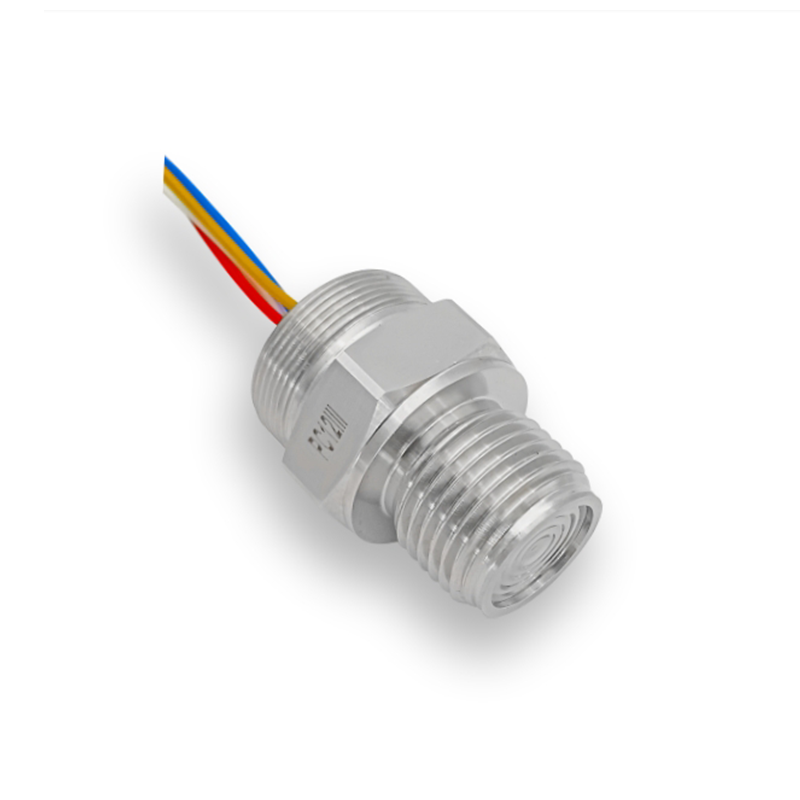
THE FIVE MANUFACTURING CONTROLS BEHIND EVERY THREADED PRESSURE SENSOR CORE
Our manufacturing workflow follows five controlled production stages:
Step 1 – Laser Welding
↓
Step 2 – Oil Filling and Steel-Ball Sealing
↓
Step 3 – Compensation Board Tin Soldering
↓
Step 4 – Lead Wire Tin Soldering
↓
Step 5 – Protective Potting
Each process includes dedicated inspection requirements, process controls, and traceability records to reduce manufacturing variation before the product enters final testing.
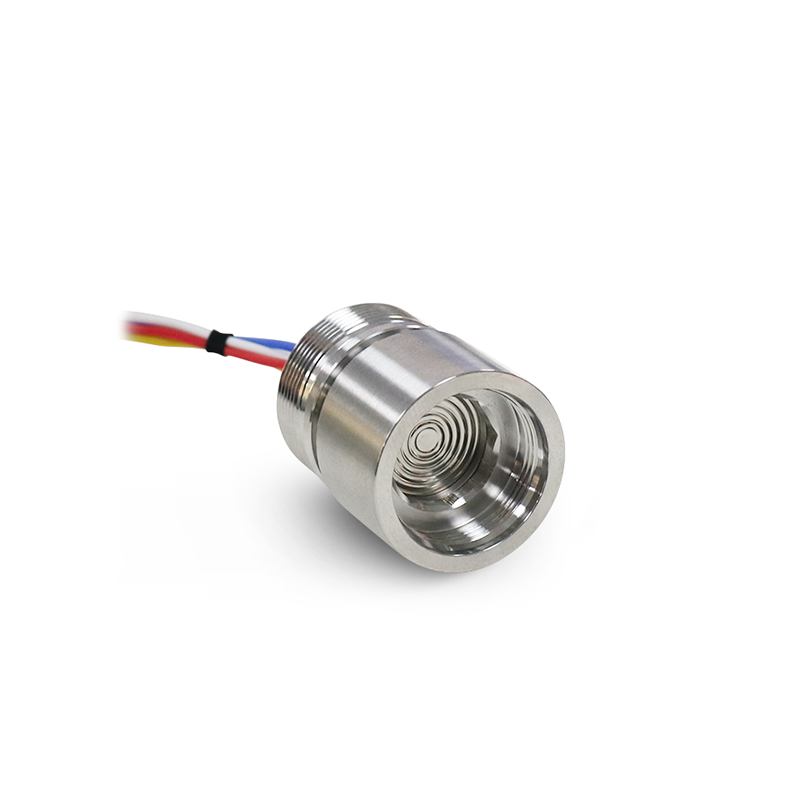
STEP 1 — LASER WELDING CREATES THE PRIMARY PRESSURE BOUNDARY
Joining the Pressure Ring, Diaphragm, and Sensor Core
The first critical manufacturing operation is laser welding.
During this process, the pressure ring, diaphragm, and threaded pressure sensor core are welded together to form the primary pressure boundary of the sensor assembly.
The welding process must achieve the specified welding strength while ensuring complete sealing integrity. Before mass production begins, the production team leader performs First Article Inspection (FAI) to verify that welding quality meets process requirements.
Unlike conventional mechanical assembly, laser welding produces a highly consistent joint that improves structural stability and minimizes sealing variation between production batches.
Quality-Control Checkpoints
During this process, we verify:
The pressure ring, diaphragm, and sensor core are correctly assembled.
Welding strength reaches the specified process requirements.
The welded structure maintains complete sealing integrity.
First Article Inspection has been successfully completed before batch production.
Engineering Note
A weld that appears visually acceptable is not necessarily reliable under repeated pressure cycles. Verifying welding strength before continuing production significantly reduces the risk of hidden sealing defects.
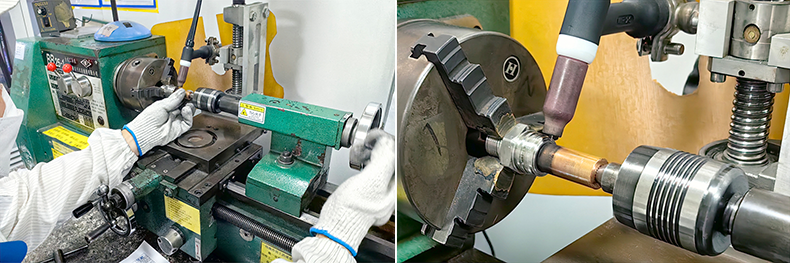
STEP 2 — OIL FILLING AND STEEL-BALL SEALING LOCK THE PRESSURE MEDIUM INSIDE
Maintaining Stable Pressure Transmission
After laser welding, the sensor enters the oil-filling and sealing process.
During this operation, the pressure transmission medium is filled into the sensor cavity. The steel ball is then welded into the oil-filling hole to permanently seal the internal pressure medium.
The sealing energy is selected according to the Process Parameter Record Sheet, ensuring that every product follows the approved manufacturing parameters.
Each production team also performs a daily sealing-column thrust test to verify sealing quality and confirm that the sealing process remains stable throughout production.
The production team leader performs First Article Inspection before the process continues.
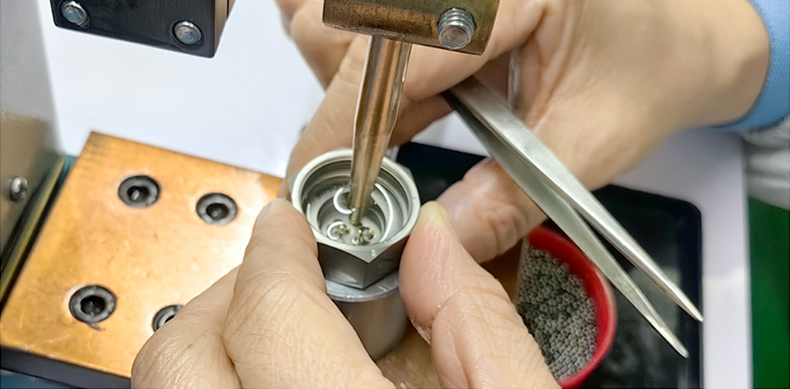
Quality-Control Checkpoints
Our inspection team verifies:
Oil filling is completed according to process requirements.
The steel ball and oil-filling hole are securely welded together.
The correct sealing energy has been selected based on the Process Parameter Record Sheet.
Daily sealing-column thrust testing has been completed.
First Article Inspection has been approved.
Common Failure Risk
If incorrect sealing energy is selected, microscopic leakage may not appear during initial inspection. It can develop gradually after repeated pressure loading, eventually affecting measurement stability and product lifespan.
Engineering Note
Daily sealing-column thrust testing is an important preventive measure. Rather than waiting for leakage to appear during final inspection, this daily verification confirms that sealing performance remains consistent throughout production.
You can also Download the Threaded Pressure Sensor Datasheet to compare sealing performance with technical specifications.
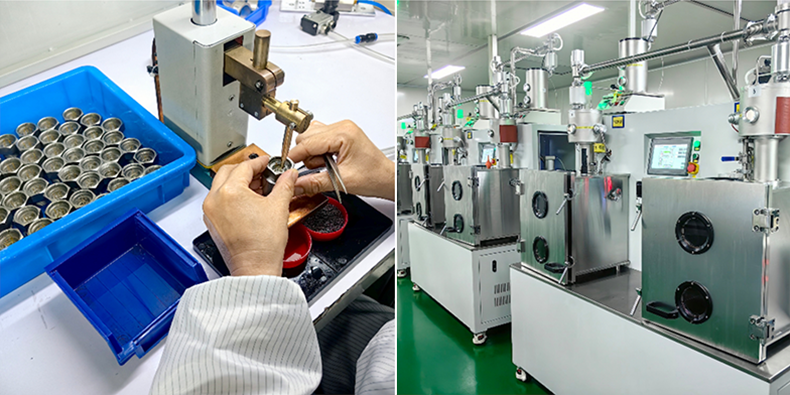
STEP 3 — TIN-SOLDERING THE COMPENSATION BOARD STABILIZES SENSOR OUTPUT
Building a Reliable Electrical Compensation Circuit
Once the pressure cavity has been sealed, the compensation board is connected to the sensor through a controlled tin-soldering process.
The compensation board plays an essential role in stabilizing sensor output by supporting the electrical compensation circuit required for accurate measurement.
After soldering, the sensor output is tested to verify that the electrical connection functions correctly before the product proceeds to the next manufacturing stage.
The production team leader performs First Article Inspection (FAI) to confirm that soldering quality and output performance comply with production requirements.
Quality-Control Checkpoints
During this stage, we verify:
The compensation board has been securely connected through tin soldering.
Sensor output has been successfully tested after soldering.
Solder joints are complete and free from visible defects.
First Article Inspection has been completed before batch production.
Engineering Note
A stable compensation circuit cannot be achieved through software adjustment alone. Consistent solder quality is equally important because poor electrical connections can introduce output instability that becomes more noticeable over time.
Common Failure Risk
Insufficient solder wetting, cold solder joints, or incomplete electrical connections may initially pass a basic functional test but later cause intermittent output fluctuations during long-term operation.
STEP 4 — TIN-SOLDERING THE LEAD WIRES COMPLETES THE SIGNAL TRANSMISSION PATH
Creating a Stable Electrical Connection Between the Sensor and External Circuit
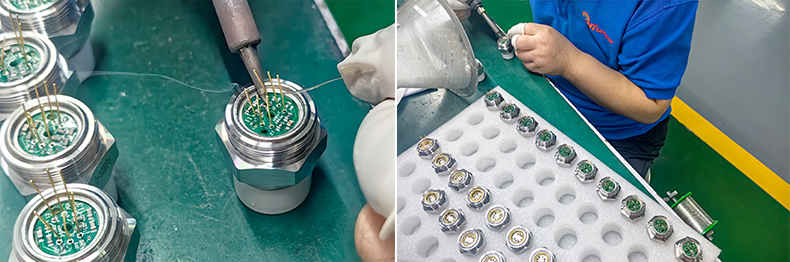
Once the compensation board has passed the output verification stage, the next operation is lead wire soldering.
During this process, the lead wires are connected to the sensor pins through tin soldering, creating the final electrical transmission path between the sensing element and the external control system. The quality of this connection directly influences signal stability, electrical continuity, and long-term reliability.
Unlike temporary electrical testing, this connection must remain mechanically secure and electrically stable throughout years of vibration, temperature cycling, and continuous industrial operation.
After soldering is completed, the production team verifies both the soldering quality and the lead wire identification to ensure that every wire is connected to the correct terminal.
Before batch production proceeds, the production team leader performs First Article Inspection (FAI).
Quality-Control Checkpoints
During this process, we verify that:
Lead wires are connected to the sensor pins through tin soldering.
Sensor signals can be transmitted through the lead wires without interruption.
Solder joints are clean, complete, and free from visible defects.
Lead wire identification matches the production drawing.
First Article Inspection has been completed and approved.
Engineering Note
Electrical failures are often traced to poor solder joints rather than defective sensing elements. Even a slight increase in contact resistance can influence output stability under changing temperatures. Consistent solder quality helps maintain reliable signal transmission throughout the sensor's service life.
Common Failure Risk
Incorrect lead wire identification or poor soldering may result in unstable output, intermittent communication, or complete signal interruption after installation.
Learn how customized supported through our OEM & ODM Pressure Sensor Manufacturing Services.
STEP 5 — PROTECTIVE POTTING PROVIDES LONG-TERM ENVIRONMENTAL PROTECTION
Sealing Sensitive Electronic Components Against Moisture and Contamination
The final manufacturing operation is protective potting.
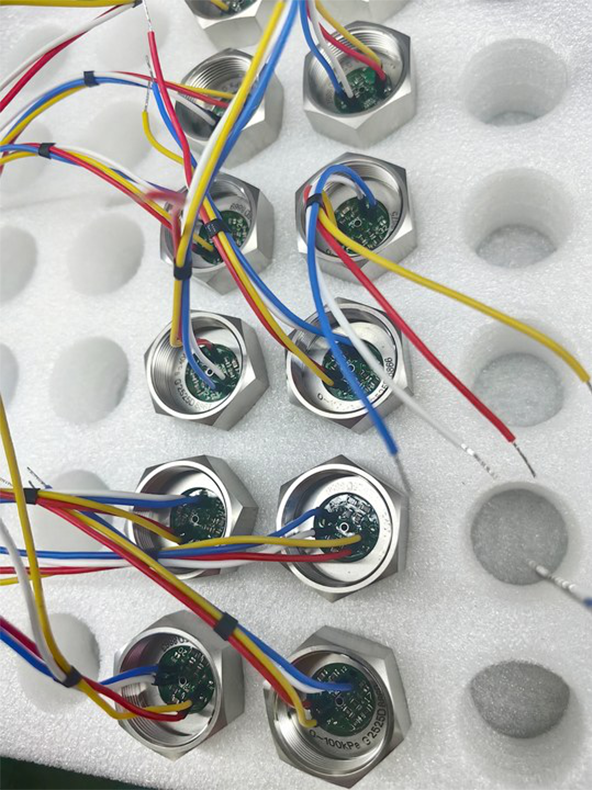
During this process, protective potting material is applied over the compensation board, solder joints, electronic components, and lead wire connections. The objective is to protect sensitive electrical assemblies from moisture, dust, vibration, and environmental contamination.
Unlike a simple coating process, protective potting must follow strict production requirements.
Before application, operators verify that the potting adhesive is within its valid shelf life. Expired adhesive is not permitted for production.
The adhesive is prepared according to the specified mixing ratio and must be thoroughly mixed until uniform before use. Proper mixing ensures that the cured material provides consistent mechanical strength and environmental protection across every production batch.
After dispensing, operators inspect the coverage to ensure that all required electronic components have been completely protected.
This process also requires daily inspection to confirm that production quality remains stable.
Quality-Control Checkpoints
During this process, we verify that:
Protective potting adhesive is prepared according to the specified mixing ratio.
The adhesive has been thoroughly mixed before application.
Expired adhesive is never used during production.
Electronic components, solder joints, and lead wire connections are completely covered.
Daily inspection has been completed and documented.
Engineering Note
Protective potting is often overlooked because it does not directly affect initial electrical output. However, it plays a significant role in maintaining long-term reliability by reducing the effects of moisture, vibration, and environmental stress on sensitive electronic components.
Common Failure Risk
Incorrect adhesive ratios, insufficient mixing, incomplete coverage, or the use of expired adhesive may lead to premature aging, moisture penetration, corrosion, or intermittent electrical failures during field operation.
WHAT WE VERIFY BEFORE A SENSOR CORE LEAVES PRODUCTION
Final inspection is designed to confirm that every manufacturing process has been successfully completed—not to compensate for poor production control.
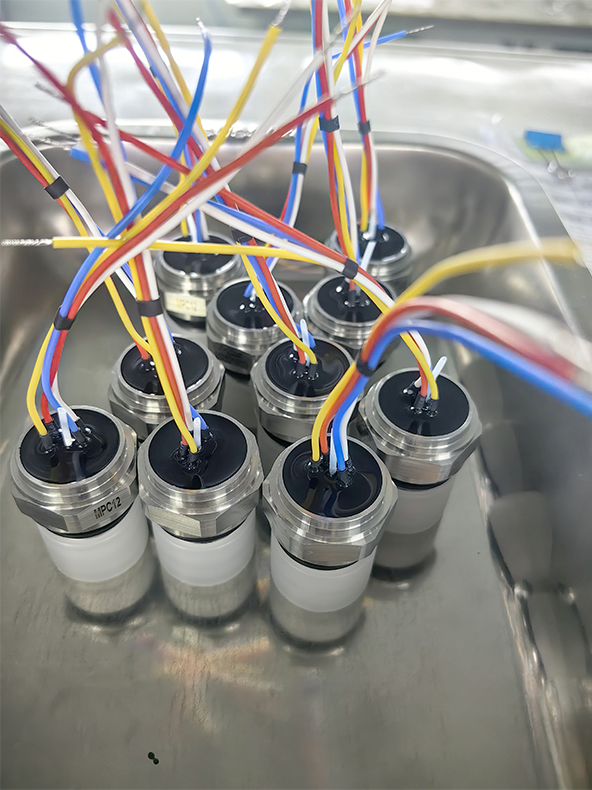
Before a threaded pressure sensor core is released for shipment, we review manufacturing records, inspection results, and process documentation to verify production consistency.
Our final verification includes:
Laser welding quality and sealing integrity
Oil filling and steel-ball sealing records
Daily sealing-column thrust test results
Compensation board output test results
Lead wire soldering quality
Lead wire identification verification
Protective potting coverage inspection
First Article Inspection (FAI) records
Daily inspection records
Product traceability information
This layered verification system helps ensure that manufacturing quality is built into every sensor core before it reaches the customer.
COMMON FAILURE MODES WE PREVENT
Each manufacturing process targets specific failure risks that may not become visible until the sensor has been operating in the field.
| Manufacturing Process | Failure Prevented |
|---|---|
| Laser Welding | Seal leakage, structural weakness |
| Oil Filling & Steel-Ball Sealing | Oil leakage, pressure transmission errors |
| Compensation Board Soldering | Output instability, poor compensation |
| Lead Wire Soldering | Signal interruption, incorrect wiring |
| Protective Potting | Moisture ingress, corrosion, vibration damage |
Preventing these failures during production is significantly more effective than identifying them after assembly or shipment.
WHAT OEM BUYERS SHOULD ASK BEFORE SELECTING A SENSOR CORE SUPPLIER
Datasheets describe performance specifications, but manufacturing capability determines whether those specifications can be maintained over thousands of operating hours.
When evaluating a threaded pressure sensor core supplier, OEM and ODM customers should ask:
Are laser welding parameters documented and controlled?
How is steel-ball sealing verified every day?
Are Process Parameter Record Sheets maintained for critical operations?
Is First Article Inspection performed at every key manufacturing stage?
How are compensation board output tests documented?
How is lead wire identification verified?
What controls prevent expired potting adhesive from entering production?
Are daily inspection records retained for traceability?
Can manufacturing records be linked to each product through unique identification?
How are corrective actions implemented when process deviations occur?
Answers to these questions often reveal more about long-term manufacturing capability than product specifications alone.
If your application requires customized pressure ranges, electrical outputs, or mechanical interfaces, explore our OEM & ODM Customization Services or Contact Our Engineering Team for technical support.
FREQUENTLY ASKED QUESTIONS
How does laser welding affect the reliability of a threaded pressure sensor core?
Laser welding forms the primary pressure boundary of the sensor. Proper welding strength and sealing integrity help prevent leakage and improve long-term structural stability.
When is the sealing-column thrust test performed?
The sealing-column thrust test is performed daily to verify that the steel-ball sealing process remains consistent throughout production.
Why is the Process Parameter Record Sheet important?
It ensures that critical manufacturing parameters, including sealing energy, remain consistent from batch to batch.
What does the output test verify after compensation board soldering?
It confirms that the compensation board has been correctly connected and that the sensor produces the expected electrical output.
How does lead wire soldering influence measurement stability?
Reliable solder joints maintain stable electrical transmission between the sensing element and external equipment, reducing the risk of intermittent signal failure.
Why must lead wire identification be inspected?
Correct wire identification prevents installation errors and ensures accurate electrical connections during system integration.
Can expired potting adhesive affect sensor performance?
Yes. Expired adhesive may not cure correctly, reducing environmental protection and increasing the risk of moisture-related failures.
Why must the potting adhesive be mixed thoroughly?
Uniform mixing ensures consistent curing characteristics, mechanical strength, and complete protection of sensitive electronic components.
Which production records are most valuable during an OEM audit?
FAI records, daily inspection reports, Process Parameter Record Sheets, output test records, and sealing verification records provide valuable evidence of manufacturing consistency.
What contributes most to long-term reliability?
Long-term reliability results from the combined control of welding, sealing, soldering, inspection, traceability, and environmental protection throughout the entire manufacturing process.
MANUFACTURING QUALITY IS BUILT ONE PROCESS AT A TIME
Reliable threaded pressure sensor cores are not created by a single inspection or calibration procedure. They are built through disciplined manufacturing practices applied consistently at every production stage.
From laser welding and controlled oil filling to steel-ball sealing, compensation board soldering, lead wire assembly, and protective potting, each operation contributes to stable performance and long-term reliability. By combining documented process parameters, First Article Inspection, daily verification, and complete production traceability, we reduce manufacturing variation before products leave the factory.
For OEM customers, industrial equipment manufacturers, and system integrators, these manufacturing controls provide confidence that every threaded pressure sensor core has been produced under repeatable, measurable, and verifiable quality standards.
-
PC10 Silicon Piezoresistive Pressure Core Solution
Read More > -
How Piezoresistive Pressure Sensors Are Manufactured
Read More > -
Key Production Processes for Seal Pressure Transmitters
Read More > -
4 Quality Control Processes for Diffused Silicon Level Transmitters
Read More > -
Inside RTD Temperature Sensor Manufacturing Process
Read More > - Read More >
-
Inside Differential Pressure Sensor Core Manufacturing: From Gold Wire Bonding to Final Protection
Read More >