 Pусский

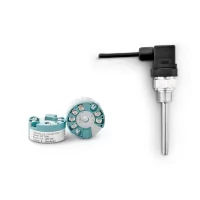
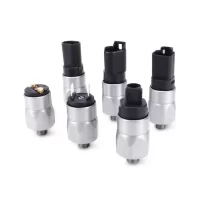
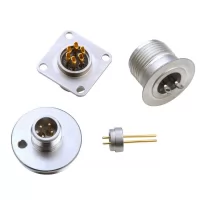
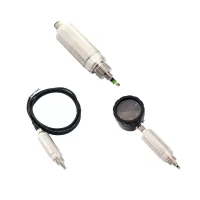
Hydrogen Pressure Transmitter Selection: PC10AU Core, PCM3502 or PCM301J(AU)
From: Issued date 2026.11.13 Back
Hydrogen is the smallest molecule in a plant. It diffuses into steel, it embrittles the metal along the path it takes, and it finds its way through materials that seal perfectly well against air or nitrogen. That single property decides almost everything about how its pressure gets measured: which sensing element, which joint, and which housing.
This guide is about one medium and three ways of measuring its pressure. It assumes you have already decided that the measurement point matters and that a pressure instrument is what you need. If the question is still what pressure measurement is for, the pressure transmitter selection guide covers the general case; if the question is which sensing element suits an application you are building yourself, the core selection guide is the place to start.
Hydrogen is not simply another process fluid with a different name on the datasheet. It changes the answer twice: once at the diaphragm, because the molecule is small enough to pass through metal, and once at the installation, because the gas is flammable across a wide range of concentrations. Those are two independent questions, and the three products in this guide exist because the answers combine in only a few useful ways.
Why hydrogen asks a different question
A pressure sensor measures by flexing a thin metal diaphragm. Hydrogen attacks that arrangement from both sides of the metal.
At the surface, atomic hydrogen is small enough to diffuse into stainless steel. Once inside, it collects at grain boundaries and in the region behind the diaphragm, where it recombines into molecular gas and occupies volume. The consequences are practical rather than theoretical: a zero point that walks, a span that drifts, and, in severe cases, a diaphragm that blisters. The industry name for the family of effects is hydrogen permeation and hydrogen embrittlement, and it is why a standard 316L diaphragm is not automatically the right choice for this gas.
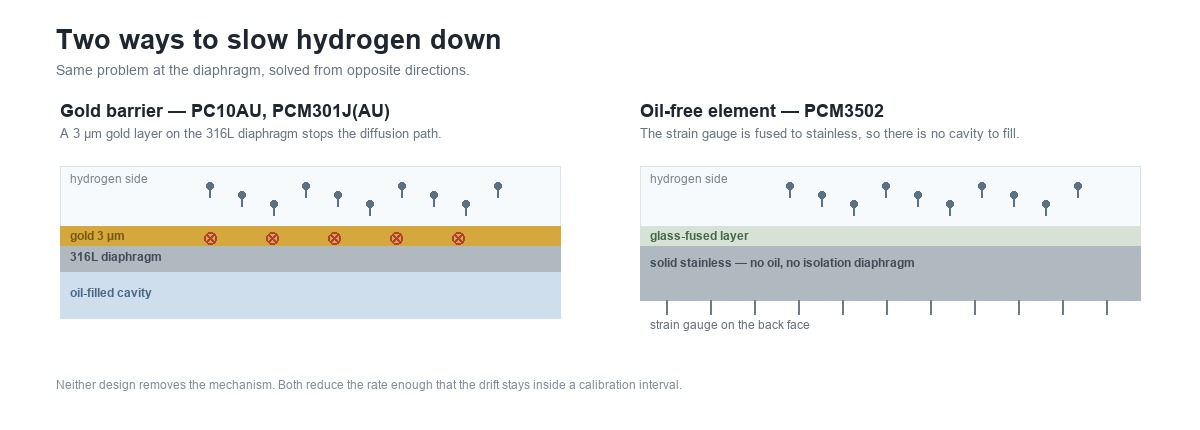
Both mitigation routes in this family address the same mechanism from different directions. One puts a barrier on the surface; the other removes the oil that hydrogen can migrate into. Neither removes the mechanism, and no supplier can honestly promise that a diaphragm will stay free of hydrogen — what a good design does is reduce the rate enough that the drift stays inside the calibration interval.
The second question is the installation. Hydrogen ignites over a wide concentration range and needs very little energy to do it, so a measurement point near a generator, a compressor, a storage manifold or a fuelling system is frequently a classified area. That is not a property of the sensor; it is a property of where the sensor is bolted.
Decision 1: is the area classified?
Ask this first, because it removes options faster than any other question and because getting it wrong is a safety issue rather than a performance issue.
If the point sits in a hazardous area, the instrument has to carry a flameproof approval. In this family that means the PCM301J, which the datasheet describes as certified Ex db IIC T6 Gb. Read that marking as three separate pieces of information:
db — flameproof enclosure: the housing contains an internal ignition rather than preventing one, and the joints are dimensioned so that the flame does not propagate into the surrounding atmosphere.
IIC — the gas group, which is the group that includes hydrogen. A IIB instrument is certified for a narrower set of gases and is not a substitute here.
T6 — the surface temperature class, the hottest permitted surface at the stated ambient. T6 is the tightest temperature class, which is what a hydrogen installation usually wants.
The certificate matters as much as the marking: a flameproof approval is issued against a configuration — housing, cable entry, display, sensor option — so the document to ask for is the certificate for the exact combination being ordered, not the model name.
If the area is not classified, the PCM301J is still a legitimate choice, but its approval stops being the reason to buy it, and the decision moves to the next question.
Decision 2: are you buying a transmitter or a sensing element?
This is where OEM customers and end users part company.
The PC10AU is a core, not an instrument. It delivers a millivolt signal from a bridge and expects the customer to supply the excitation, the amplification, the temperature compensation and the housing. Its published range is 100 kPa to 40 MPa, the diaphragm is 316L with a gold coating, and the electrical connection is either gold-plated Kovar pins or silicon soft wires. It is the right part when the transmitter is your product, when the mechanical envelope is yours to define, or when a hundred units of a standard instrument do not fit the design you are building.
The PCM3502 and the PCM301J are instruments. They give 4–20 mA or voltage outputs, they carry their own compensation, and they bolt to the process like any other transmitter. If the requirement is "measure the pressure at this point", one of these is the answer; if the requirement is "build a pressure measurement into our product", the core is.
One practical difference sits inside that choice. The core needs a constant current or constant voltage supply and a stable reference; the two transmitters accept 12–30 VDC and return a finished signal. The integration work is real, and it belongs to whoever buys the core.
Decision 3: range, and where the published table ends
The three products do not cover the same span, and the difference is worth reading carefully because it is where enquiries tend to go wrong.
The PC10AU core is published from 100 kPa to 40 MPa. The PCM301J covers −100 kPa up to 60 MPa. It is the one that reaches below atmospheric, which is what allows it to sit on a system that is evacuated before filling. The PCM3502 is published from 2.5 MPa to 70 MPa in steps — 2.5, 25, 45 and 70 MPa — and it is the high-pressure member of the family.
Two things follow. First, 70 MPa is the top of the published range for the PCM3502; anything above it is outside the table and becomes an engineering conversation rather than a catalogue selection. Second, the three ranges overlap only in the middle: between 2.5 and 40 MPa all three can be considered, below the PCM3502's 2.5 MPa starting point the choice is between the core and the PCM301J, and above the core's 40 MPa limit only the PCM3502 reaches.
Overload is specified as well as range, and it matters on a hydrogen system because pressure spikes are normal at valve closure and compressor start. The PCM3502 publishes an overload of twice its range and a burst pressure of four times, with a service life of at least 106 pressure cycles. Those are the numbers to check against a system that cycles, rather than the range alone.
Decision 4: two ways to slow hydrogen down
The family uses two different constructions against the same problem, and understanding the difference is what stops a wrong-order conversation later.
The gold barrier: PC10AU and PCM301J(AU)
Here the wetted surface of a 316L diaphragm carries a gold coating — 99.9 % pure, 3 µm thick, in the PC10AU datasheet's own description. Gold is used because hydrogen does not diffuse through it at a useful rate, so the coating acts as a barrier between the gas and the steel underneath. The same logic is applied to the electrical side, where the pins are gold-plated Kovar or silicon soft wires rather than bare metal.
On the PCM301J this is an option rather than the standard build, and it is written into the order code as the suffix (AU). That detail is easy to lose: a PCM301J ordered without it is a flameproof transmitter with an ordinary stainless diaphragm, which is the right instrument for many gases and the wrong one for this gas. The datasheet makes the point in a footnote rather than in the ordering table, which is exactly why it gets missed.
The oil-free path: PCM3502
The PCM3502 solves the same problem by changing the sensing structure rather than coating it. Its measuring element is a strain gauge fused onto stainless steel by a glass micro-melt process, with an integral pressure port and no oil-filled cavity behind an isolation diaphragm.
That construction removes the volume that hydrogen would otherwise migrate into, so there is no fill fluid to become contaminated and no thin isolation diaphragm to blister. It also removes the fill fluid's temperature lag, which is why the response time is published at 90 ms or better. The trade is that this is a transmitter, not a core, and that its published range starts at 2.5 MPa rather than at 100 kPa.
Decision 5: the accuracy figure that matters is the temperature one
Both instruments publish an accuracy of ±0.5 %FS, qualified at 25 ± 5 °C. Both also publish a wider-temperature figure, and it is three times larger:
| PCM3502 | PCM301J(AU) | |
|---|---|---|
| Accuracy at 25 ± 5 °C | ±0.5 %FS | ±0.5 %FS |
| Over a temperature band | ±1.5 %FS over −20 to 85 °C | ±1.5 %FS over −10 to 70 °C |
| Hysteresis and repeatability | — | ±0.1 %FS |
| Response time | 90 ms or better | 100 ms or better to 90 %FS |
This is not a criticism of either instrument; it is how pressure transmitters are specified across the industry, and the two figures answer different questions. The 25 °C number describes what the instrument does in a test cell. The temperature figure describes what it does on a skid that sees frost in the morning and sun in the afternoon.
For a hydrogen installation the practical consequence is that the ambient swing, not the headline accuracy, sets the error budget. A 0.5 %FS instrument on a 25 MPa span is ±0.125 MPa at a controlled temperature and up to ±0.375 MPa across the band — which is the number a control loop or a safety interlock actually sees. If the loop needs better than that, the answer is a narrower span, not a different brochure.
The core has a similar shape. The PC10AU is compensated over 0 to 60 °C on ranges up to 70 kPa and over −10 to 70 °C on the others, so the compensation band is part of what the integrator inherits. Outside it, the millivolt signal drifts with temperature and the customer's own electronics have to carry the correction.
Decision 6: output, supply and connection
The two transmitters are straightforward on the signal side. Both offer 4–20 mA from a 12–30 VDC supply; the PCM301J also offers 1–5 V and 0–5 V, and the PCM3502 offers a 0.5–4.5 V ratiometric output for vehicle and embedded work. If the receiving system is a PLC analogue card, 4–20 mA is the default; if it is a controller with a ratiometric input, the voltage version saves a conversion.
The core is different: 1.5 mA constant current is the recommended excitation, with 10 V constant voltage as the alternative, and the input impedance is published for both. Whoever integrates it has to provide that excitation and a stable reference — which is the real content of the "core or transmitter" decision.
Enclosure is IP65 on both transmitters. The PCM3502 datasheet notes that the round Packard connector version reaches IP67, which is the option to specify when the connector will be washed or submerged rather than merely rained on.
The three routes side by side
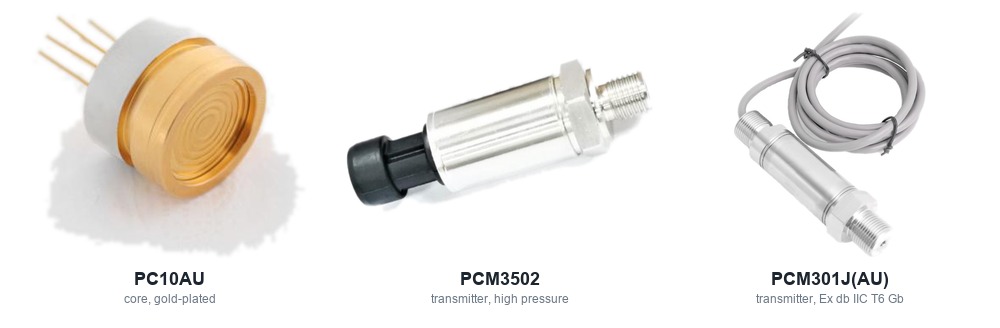
| PC10AU | PCM3502 | PCM301J(AU) | |
|---|---|---|---|
| What it is | Sensing core, millivolt output | Transmitter | Transmitter, flameproof |
| Range | 100 kPa to 40 MPa | 2.5, 25, 45, 70 MPa | −100 kPa to 60 MPa |
| Accuracy at 25 °C | Core, quoted by the integrator | ±0.5 %FS | ±0.5 %FS |
| Across temperature | Compensated −10 to 70 °C ; 0 to 60 °C on the ranges up to 70 kPa | ±1.5 %FS over −20 to 85 °C | ±1.5 %FS over −10 to 70 °C |
| Hydrogen approach | Gold-plated 316L diaphragm, 3 µm, 99.9 % pure | Glass micro-fused element, no oil fill | Gold-plated sensor, ordered as (AU) |
| Output | mV bridge; 1.5 mA or 10 V excitation | 4–20 mA or 0.5–4.5 V | 4–20 mA, 1–5 V or 0–5 V |
| Supply | Constant current or voltage, supplied by the customer | 12–30 VDC | 12–30 VDC |
| Enclosure | Integrated by the customer | IP65, IP67 with the round Packard connector | IP65 |
| Hazardous area | — | — | Ex db IIC T6 Gb |
| Choose it when | The transmitter is your product | High pressure, no classified area, fast response | The point is in a classified area |
Read the table as a sequence rather than a comparison. The top of it decides the bottom: a classified area removes two of the three rows before range or accuracy are discussed, and an OEM programme removes the other two before the area classification is discussed.
Where each one is used
| Situation | Normally | Why |
|---|---|---|
| Electrolyser outlet or hydrogen dryer | PCM301J(AU) | Indoor plant rooms are commonly classified, and the vacuum-capable range covers start-up purging |
| Compressor suction and discharge | PCM301J(AU) at low and medium pressure, PCM3502 at high pressure | The area decides the housing; the discharge pressure decides whether 70 MPa is needed |
| Storage manifold or tube trailer filling | PCM3502 | High pressure with a fast response, where the manifold is outdoors and unclassified |
| Fuel cell test bench | PCM3502 or PCM301J(AU) | Depends on whether the bench sits inside a classified enclosure |
| Hydrogen vehicle or mobile equipment | PC10AU core | The customer builds the sensor into a package with its own housing and connector |
| Instrument OEM building a hydrogen transmitter | PC10AU core | Volume, mechanical envelope and certification are the customer's |
| Natural gas with hydrogen blending | Depends on the blend | The blend ratio decides whether the permeation question applies at all; ask before selecting |
A worked specification
Take an electrolyser outlet. Normal working pressure 1.2 MPa with a 1.6 MPa trip, indoor plant room inside a classified boundary, 4–20 mA to a PLC analogue card, ambient from 5 to 40 °C, and the medium is hydrogen at high purity.
Classification first. The point is inside a classified area, so the instrument has to be flameproof. That removes the PC10AU and the PCM3502 regardless of their other merits.
Confirm the gas group. Hydrogen sits in group IIC, so the marking has to read IIC. A IIB instrument is not a substitute even if it is cheaper or in stock.
Range. The PCM301J is published from −100 kPa to 60 MPa, so 1.6 MPa sits comfortably inside. There is no need to go to the top of the table; an unnecessarily wide span spends accuracy on range that will not be used.
The suffix. The medium is hydrogen, so the order needs the gold-plated sensor: (AU). This is the field that gets dropped when a previous project's order line is edited.
Output and supply. 4–20 mA from 12–30 VDC suits the PLC card directly.
Process connection and electrical entry. Both are separate fields in the ordering table, and both are part of what the certificate covers.
The order line therefore begins PCM301J(AU) and continues with the range code, the pressure reference, the process connection, the electrical connection and the housing, each taken from the ordering table rather than from memory. The one element that must not be inferred is the (AU): without it, the order is a flameproof transmitter with a standard stainless diaphragm.
The same requirement without the classified area gives a different answer: 1.6 MPa is below the PCM3502's published starting point of 2.5 MPa, so the instrument of choice becomes the PCM301J(AU) for its range alone, or the PC10AU if the customer is building the transmitter. That is worth noticing — on this duty the flameproof model is selected for two independent reasons, and dropping either one changes the answer.
Six mistakes worth avoiding
Ordering the PCM301J without (AU). The costliest mistake in this article, because the instrument arrives, installs, and then drifts over months as hydrogen moves through a diaphragm that was not coated.
Treating 70 MPa as a starting point. The pulse cycles a hydrogen system sees are severe, and the burst rating is four times the range. Running a 70 MPa instrument at 70 MPa continuously leaves the design working at its published ceiling; ask what margin the installation actually needs.
Assuming 90 MPa is a catalogue option. The published table ends at 70 MPa for the PCM3502. Above that, the conversation is about a specific engineering requirement, not about ticking a longer range on an order form.
Using a IIB instrument where IIC is required. Hydrogen is the reason the IIC group exists; a lower group is a different certification, not a cheaper version of the same one.
Comparing only the 25 °C accuracy. Both transmitters are ±0.5 %FS in the test cell and ±1.5 %FS across their temperature band. A specification written against the first number and installed against the second produces a permanent argument at commissioning.
Buying the core expecting an instrument. The PC10AU gives a millivolt bridge signal and expects excitation, amplification and compensation from the customer. It is the right part for an OEM and the wrong part for a maintenance team expecting a 4–20 mA loop.
What to put in the enquiry
A hydrogen pressure enquiry that arrives with these eleven points can be answered once, with a model and a code, instead of over three exchanges:
The gas: pure hydrogen, a blend, or hydrogen with another process component, and the purity or blend ratio.
Whether the point is inside a classified area, and under which regulation the area is classified.
The required gas group and temperature class, if they have already been fixed by the site.
Normal, maximum and trip pressures, and whether the system is ever evacuated.
Process temperature range.
Ambient temperature range at the instrument.
The accuracy the loop needs, stated over the temperature band rather than at 25 °C.
Output and supply available at the point.
Process connection, thread or flange, and the wetted material allowed by the site.
The electrical entry and connector type, and whether wash-down or immersion applies.
Whether the customer is buying an instrument or a core, and if a core, what excitation the electronics provide.
Need a model confirmed against your system?
Send the gas and its purity, whether the area is classified with the gas group and temperature class, the pressure range including any vacuum condition, the process and ambient temperatures, the output the control system expects, and whether you are buying an instrument or a sensing element. Those six answers decide the route before any price is discussed.
Requirements can be sent through the online message form or by email to dr@wtsensor.com. The same address is in the contact block of every hydrogen datasheet, and can be used to request a certificate or a calibration report for a specific configuration as well as a quotation.
Where to go next
How to select a pressure transmitter — the general selection logic that this guide narrows to one medium.
How to select a pressure sensor core — for the OEM route, where the core is one part of a larger design.
PCM3051 differential pressure transmitter selection and ordering — if the measurement is a differential across a filter, a valve or an orifice rather than a line pressure.
Pressure transmitter troubleshooting — for the signal-side faults that look like instrument faults.
About WTsensor
Nanjing Wotian Technology has been building pressure instruments since 2005, and works on both sides of the question this article asks: it makes the sensing element and the finished transmitter, in the same plant, under the same calibration. That matters for hydrogen work, because the coating, the welding and the leak test are the parts of the build that decide whether a diaphragm survives the medium, and here they are not split between two suppliers.
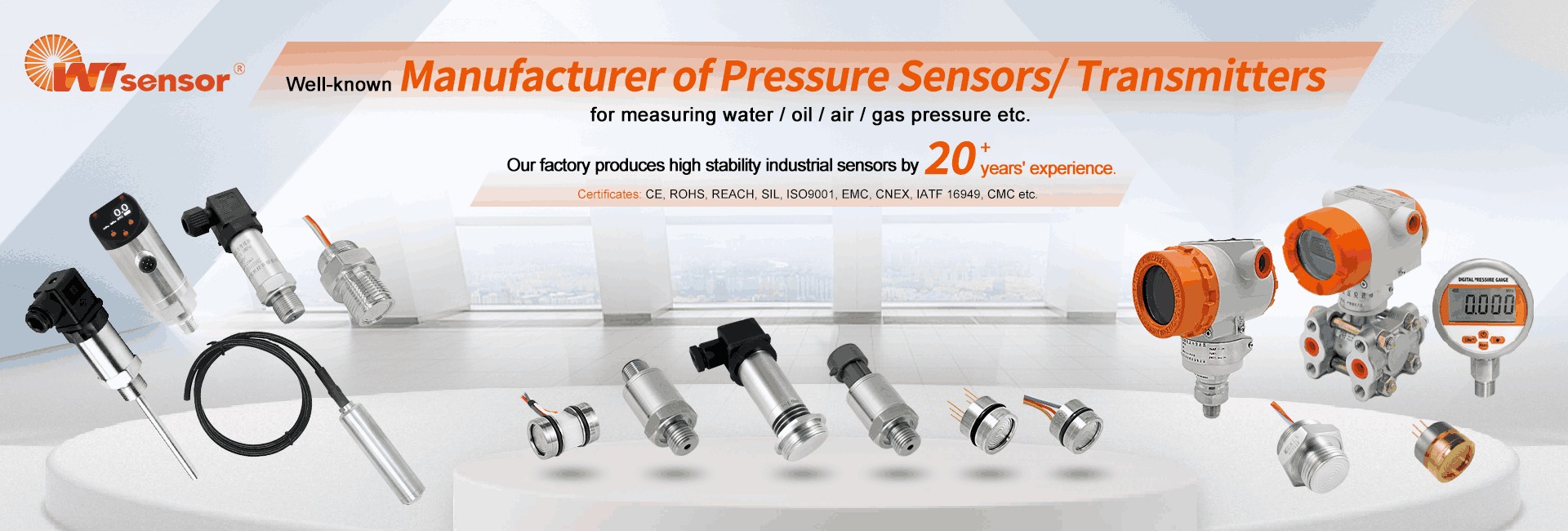
The range covers pressure, differential, level and temperature, on three level principles and on both silicon and glass micro-fused sensing technologies. That breadth is why the honest answer to a hydrogen enquiry is sometimes a different product rather than a better price.
Questions that come up in every hydrogen enquiry
Can I use a normal 316L diaphragm with hydrogen? It is the wrong starting point. Hydrogen diffuses into stainless steel and collects behind the diaphragm, so the zero and span move over months. The two designs in this family address that: a gold barrier on the surface, or an oil-free glass micro-fused element. Specify one of them rather than relying on the base material.
What does (AU) mean? It is the gold-plated sensor option on the PCM301J, and it is the difference between an instrument suited to hydrogen and one suited to other gases. It appears as a suffix on the model, not as a separate line in the ordering table.
Is the PCM3502 flameproof? No. It is published at IP65, with an IP67 connector option, and no hazardous-area approval. In a classified area the instrument has to be the PCM301J(AU), which is certified Ex db IIC T6 Gb.
Why does the gas group matter? IIC is the group that includes hydrogen, and it is the tightest of the three gas groups. A IIB approval covers a narrower set of gases, so an instrument marked IIB is a different certificate rather than a cheaper version of the same one.
Can the PC10AU core be used in a classified area? The core is a component, not an instrument. It has no enclosure and no approval of its own; whatever housing and certification the customer builds around it belongs to the customer's product.
What is the highest pressure available? The PCM3502 is published to 70 MPa. Above that the requirement leaves the catalogue and becomes a specific engineering question, and it should be asked as one rather than assumed from a range column.
Does the gold coating change the measurement? The coating is applied to the diaphragm surface to resist permeation, and the PC10AU datasheet describes the sensor as maintaining its performance with the coating in place. What changes is the medium it survives, not the signal it produces.
What if the system is evacuated before filling? Only the PCM301J covers the vacuum side, from −100 kPa. The other two start above atmospheric, so a purge or evacuation cycle takes them out of consideration.
-
What is a Metal Bellows? Complete Guide for Engineers
Read More > -
What is a Wireless Pressure Sensor? Complete Guide for Industrial IoT
Read More > -
How to Choose a Pressure Transmitter: A Complete Selection Guide
Read More > -
Hydrostatic Level Measurement: How to Select a Submersible Level Transmitter
Read More > -
How to Select a Pressure Sensor Core: A Complete Selection Guide
Read More > -
Why a Wrong Pressure Transmitter Reading Is Usually Not a Broken Transmitter
Read More > -
How to Choose a Wireless Pressure Transmitter: PCM9860, PCM9865 and the PCM9880 Family
Read More > -
PCM3051 Differential Pressure Transmitter Selection and Ordering Guide
Read More > -
Hydrogen Pressure Transmitter Selection: PC10AU Core, PCM3502 or PCM301J(AU)
Read More >
This article Tags: hydrogen pressure transmitter pc10au pcm3502 pcm301j gold plated diaphragm ex db iic t6 gb
Back to List