 Pусский
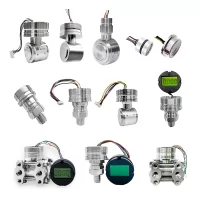
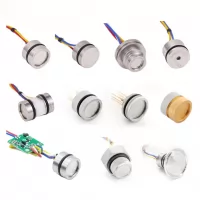
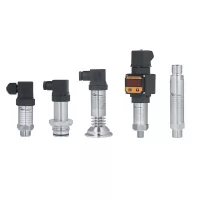
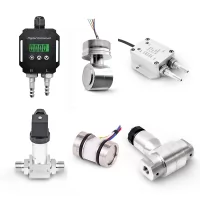
How to Choose a Pressure Transmitter: A Complete Selection Guide
From: Issued date 2026.09.23 Back
Choosing a pressure transmitter looks straightforward — pick a range, pick an output, order it. In practice, most field failures that get blamed on the instrument were decided at the specification stage: a range wider than the working pressure, an accuracy figure quoted without its temperature conditions, a wetted material that was correct on day one and corroding by month eight.
This guide works through the eight decisions that define a pressure transmitter, in the order they should be resolved. It is written for plant engineers, system integrators, and procurement teams who need to specify an instrument that still reads correctly after years in service.
Scope note: this article covers parameter-level selection for any application. For a worked example specific to hydraulic and pipeline duty, see How to Select the Right Pressure Transmitter for Hydraulic and Pipeline Applications.
The Eight Decisions at a Glance
| # | Decision | The question you are answering | Get it wrong and… |
|---|---|---|---|
| 1 | Pressure type | Gauge, absolute, sealed gauge, or differential? | Zero point is wrong by the barometric or static pressure |
| 2 | Range | What span, and what overpressure protection? | You lose accuracy, or you damage the diaphragm |
| 3 | Accuracy | What is included in the quoted figure? | Real error in your plant is several times the datasheet number |
| 4 | Output signal | 4–20 mA, HART, RS485/Modbus, or wireless? | It will not talk to your control system |
| 5 | Process connection | Thread, flange, flush, or sanitary? | Leaks, dead pockets, blocked pressure paths |
| 6 | Wetted materials | Diaphragm and body alloy vs. your medium | Gradual corrosion and eventual failure |
| 7 | Environment | IP rating, ambient temperature, vibration | Water ingress or drift within a season |
| 8 | Hazardous area | Zone classification and required protection | Non-compliance; instrument cannot be installed |
Decisions 1–3 determine what the instrument measures. Decisions 4–8 determine whether it survives in your plant.
1. Pressure Type
This is the decision that most often goes wrong silently, because a wrong pressure type still produces a plausible number.
Gauge pressure is referenced to local atmospheric pressure, so the reading moves with weather and altitude. It is the normal choice for pump discharge, hydraulic lines, compressed air, and most liquid process lines — anywhere “pressure above ambient” is the engineering quantity that matters. As a practical guide, gauge pressure suits an application where barometric variation is small relative to the measurement. Where that variation is a significant fraction of the reading, a sealed-gauge reference takes it out of the result.
Absolute pressure is referenced to a sealed vacuum. It is required when the process pressure is low enough that atmospheric pressure is a material fraction of the reading: vacuum systems, condenser pressure, distillation columns, and low-kPa measurements.
Sealed gauge references a sealed chamber that is not vented to atmosphere. Use it where gauge-style readings are wanted but the local atmospheric reference is unreliable — submersible level instruments, sealed enclosures, or high-pressure systems where venting the reference is impractical.
Differential pressure measures the difference between two ports. Typical duties are filter and strainer monitoring, flow across an orifice, and level in closed or pressurised vessels.
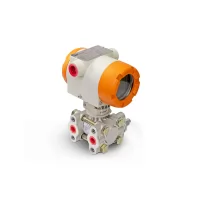
Gauge and sealed-gauge duties are covered by standard industrial transmitter platforms; differential duty needs a two-port construction with a dedicated differential sensing element, as in WTsensor’s differential pressure transmitter range.
2. Pressure Range
Range selection has two failure modes pulling in opposite directions.
Too wide a range. Accuracy on most industrial transmitters is quoted as a percentage of full scale (%FS), not of the reading. A 0.5 %FS instrument on a 10 MPa range carries ±50 kPa of error wherever you operate. If the line only ever runs at 1 MPa, that is effectively a ±5 % instrument. This is among the most common specification errors in industrial pressure measurement.
Too narrow a range. The diaphragm is designed to flex within limits. Every transmitter therefore has two overpressure figures:
Proof pressure — the pressure it can withstand without a permanent calibration shift. A common design target is 2× the nominal range.
Burst pressure — the pressure at which the pressure-containing structure fails, typically several times the nominal range.
Proof pressure is the figure that matters in practice, because water hammer, pump start-up transients, and valve closures routinely overshoot steady-state working pressure.
How to size it:
Identify the normal working pressure — not the system’s rated maximum, but where the line actually sits in normal operation.
Identify the highest realistic transient.
Choose a nominal range so the working pressure falls in the upper two-thirds of the span. This keeps you away from the low end, where %FS error dominates, while leaving headroom.
Confirm the proof pressure comfortably exceeds step 2.
Example: a line running normally at 1.0 MPa with occasional 1.6 MPa start-up spikes. A 1.6 MPa range places the working point at 63 % of span and the spike right at the top. A 2.5 MPa range places the working point at 40 % of span and the spike at 64 %. That 2.5 MPa range is a practical choice for this duty, provided the transmitter’s proof pressure and other specifications meet the site requirements.
3. Accuracy
“0.5 % accuracy” becomes a specification only when you know what is included in it.
| Component | What it means |
|---|---|
| Non-linearity | Deviation of the output curve from a straight line (usually best-fit straight line, BFSL) |
| Hysteresis | Difference in output at the same pressure approached from above vs. below |
| Repeatability | Spread of readings at the same pressure under identical conditions |
| Zero and span offset | Fixed errors at the endpoints of the range |
| Thermal zero shift | How far zero moves per °C away from the calibration temperature |
| Thermal span shift | How far sensitivity changes per °C |
The first four are often combined into a “reference accuracy” or “room-temperature accuracy” figure. The last two decide field performance, and are frequently quoted separately — or omitted.
Three questions to ask any supplier:
Is the figure %FS or %span? For a transmitter these are usually the same, but the wording matters in a formal specification.
Does it include thermal effects, and over what temperature range? An accuracy figure valid only at 20–25 °C says nothing about a transmitter on an outdoor pipe rack at −10 °C.
Is it a total error band, or separate terms? A total error band is the number you can design to. Separate terms must be summed — usually root-sum-square, which understates the worst case.
For general industrial process duty, 0.5 %FS instruments are the workhorse. Higher-demand duties — differential measurement across an orifice, precision test benches — require a higher class of instrument; WTsensor’s highest-accuracy platforms reach ±0.075 %FS.
4. Output Signal
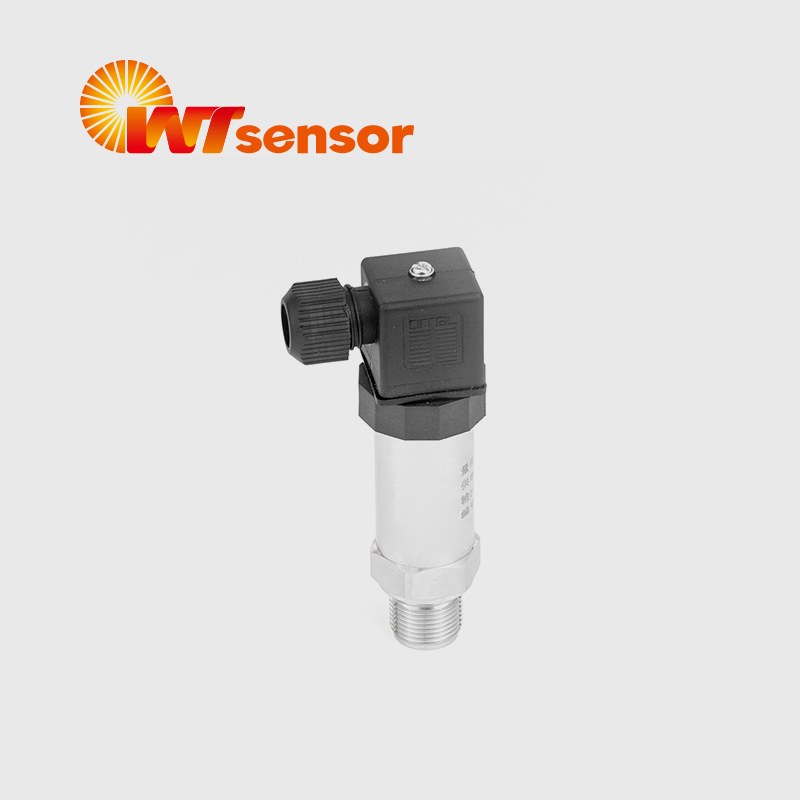
| Output | Best for | Watch out for |
|---|---|---|
| 4–20 mA (2-wire) | The default industrial loop. Noise-immune, self-diagnosing (0 mA = fault) | One variable only; configuration fixed at order |
| 4–20 mA + HART | Smart installations — remote configuration, diagnostics, multidrop | Needs a HART-capable master or handheld to unlock features |
| RS485 / Modbus | Multi-drop digital networks, panel and skid controllers | Bus topology and termination discipline are on you |
| Wireless (NB-IoT / LoRaWAN / 4G) | Remote, distributed, or cable-prohibitive points | Battery budget and coverage must be verified on site |
Three practical rules: default to 4–20 mA unless there is a reason not to, because it is the most robust and most easily troubleshootable signal in industrial instrumentation; choose HART when you want to re-range or trim without touching the instrument; choose RS485/Modbus when you are already running a bus and want several instruments on one cable run.
Where the measuring point is remote or expensive to cable, the decision changes shape — compare wireless against wired on installed cost, not instrument price. That comparison, including battery-life engineering and radio trade-offs, is covered in What is a Wireless Pressure Sensor? Complete Guide for Industrial IoT.
5. Process Connection
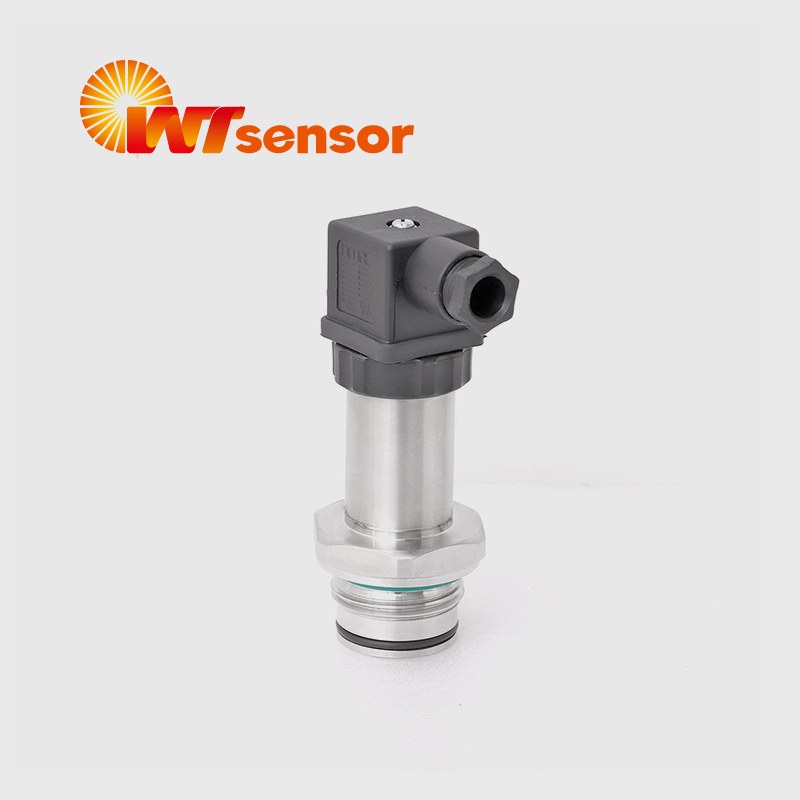
| Connection | Use when | Notes |
|---|---|---|
| Threaded (G, NPT, M) | Clean, non-viscous media; general industrial duty | Most common; use a proper sealing method for high pressure |
| Flanged / remote seal | Hot, corrosive, viscous, or hygienic media; instrument must be isolated from process heat | Capillary-filled remote seals move the instrument out of the hot zone |
| Flush diaphragm | Viscous, crystallising, or particulate-laden media | Removes the dead pocket where solids settle and block the pressure path |
| Sanitary (Tri-clamp) | Food, beverage, pharmaceutical, biotech | Designed for clean-in-place and sterilise-in-place duty |
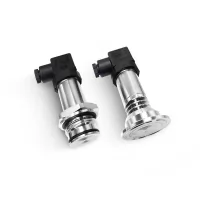
The mistake to avoid is a threaded connection on a medium that will clog it. Anything that crystallises, polymerises, or carries solids needs a flush diaphragm or remote seal — otherwise the port plugs and the transmitter reads the wrong value slowly and convincingly. For hygienic duty WTsensor offers a dedicated sanitary pressure sensor range and a flush diaphragm transmitter for viscous industrial media.
Verification tip: where customers or auditors will ask for 3-A or EHEDG documentation, confirm the exact certification held by the specific model before committing it to a hygienic specification. Do not assume that a sanitary connection implies a hygienic certificate.
6. Wetted Materials
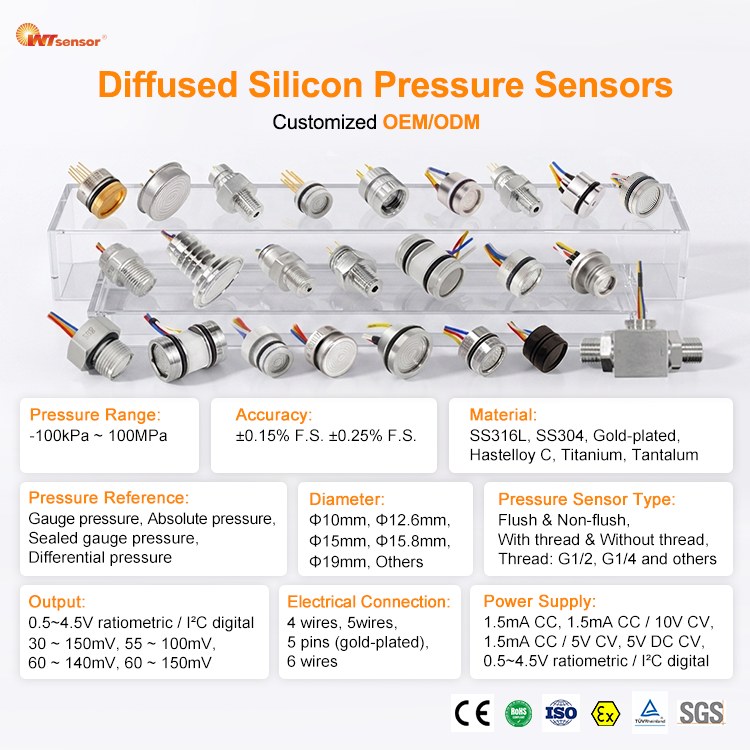
The wetted parts are the diaphragm, the pressure port, and any seal in contact with the medium. Material selection fails slowly, which is what makes it dangerous: the instrument reads correctly for months, then drifts, and by the time anyone investigates the diaphragm has been thinning since installation.
| Material | Typical use | Limits |
|---|---|---|
| 316L stainless steel | Water, air, hydraulic oil, most neutral process media | Attacked by chlorides at higher temperatures, and by many acids |
| Hastelloy C | Chloride-bearing, oxidising and mixed-acid media; seawater | Higher cost; specify only when the medium demands it |
| PTFE-coated diaphragm | Corrosive media where a coating is sufficient | Coating integrity matters more than base-metal strength |
| 17-4PH stainless | High-pressure duty where 316L lacks strength | A strength upgrade, not a corrosion upgrade |
Build the list from every medium the diaphragm will contact, including cleaning agents and flush fluids — not just the process fluid — and check concentration and temperature together. A medium that is benign at 20 °C may be aggressive at 80 °C. Ask the supplier what the diaphragm actually is: “stainless steel” is not an answer, because 316L, 17-4PH, and Hastelloy C are three different instruments with three different service lives.
7. Environment and Ingress Protection
| Parameter | What to specify | Why |
|---|---|---|
| Ingress protection | IP65 for sheltered indoor locations; IP67 for outdoor and washdown duty | Ingress protection must match the actual installation environment |
| Ambient temperature | The range the electronics will see, not the process temperature | Enclosures on outdoor racks exceed air temperature in sun |
| Media temperature | The temperature at the diaphragm | Determines whether a remote seal or cooling extension is needed |
| Vibration | Continuous amplitude and frequency | Standard welded joints fatigue; high-vibration duty needs a reinforced design |
Two points worth stating plainly:
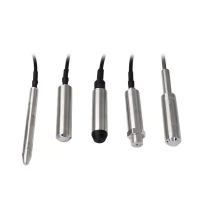
An instrument rated IP67 is not submersible. For submersible or permanently wet installations, specify an IP68-rated transmitter and require evidence that the rating applies to the complete assembled instrument, not only to the sensing probe. A credible ingress-protection report states the sample as a finished product, the test standard, and the depth with a duration — a depth figure with no duration, or a probe-only sample, does not evidence an IP68 instrument. As a reference point, WTsensor’s submersible level transmitters (PCM260, PCM266 and PCM269) are covered by SGS test reports recording IP6X and IPX8 passes on finished-production samples, with the PCM260 unit tested to a 60 m equivalent depth over 48 hours.
The ambient temperature range usually bites before the media temperature does. Transmitters on outdoor racks in cold climates see swings that no indoor calibration captured.
Water ingress is a common environmental cause of transmitter failure, which is why the rating should be matched to the installation rather than to the catalogue.
8. Hazardous Area
Where the installation is classified, the protection concept is not optional and cannot be substituted by a “rugged” instrument.
| Protection | How it works | Typical use |
|---|---|---|
| Ex d (flameproof) | The enclosure contains an internal explosion | Zone 1 / Zone 2, higher-power instruments |
| Ex ia (intrinsically safe) | Energy is limited so ignition is not possible | Zone 0 / Zone 1, loop-powered instruments |
| Non-Ex industrial | No hazardous-area rating | Safe areas only |
Confirm the zone and gas group with your safety engineer, check the temperature class against the medium’s auto-ignition temperature, and verify the certificate rather than only the marking — a datasheet showing “Ex d IIC T6 Gb” describes a protection concept, while the certificate is what an inspector will ask for. WTsensor’s pressure transmitter range is covered by EU-type examination certificates issued under Directive 2014/34/EU by ECM (Notified Body 1282) — II 1G Ex ia IIC T6 Ga for intrinsic safety and II 2G Ex db IIC T6 Gb for flameproof, both valid to October 2028 — alongside national Ex certificates for individual models.
Pressure Sensor vs. Pressure Transmitter: Which One Do You Need?
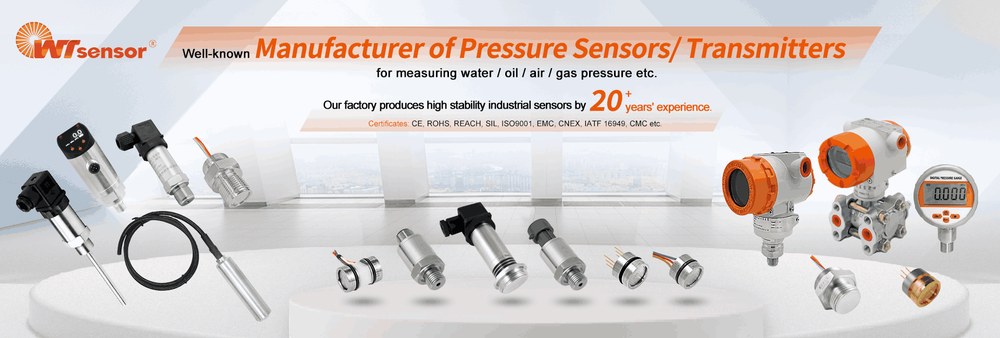
These two terms are used interchangeably in search, but they describe different objects and serve different buyers.
| Pressure sensing core | Transmitter module | Complete pressure transmitter | |
|---|---|---|---|
| Sensing element | Yes | Yes | Yes |
| Signal conditioning | Usually external | Integrated | Integrated |
| Standard industrial output | Not typically — mV-level | 4–20 mA / HART | 4–20 mA, HART, RS485/Modbus, or wireless |
| Housing and environmental protection | None | Partial — no full field enclosure | Complete, including IP and Ex ratings |
| Typical buyer | OEM / instrument manufacturer | Equipment or system integrator | Plant, contractor, system integrator |
| Where it is installed | Inside your own product | Inside your cabinet or skid | Directly on the process line |
The practical test is what you are going to do with the signal. If you are building an instrument and need a raw sensing element to design around, you buy a core. If you are measuring a process and need a number your control system can read, you buy a transmitter. The middle case is easy to overlook: a module gives you a standardised output without a field enclosure, which suits integrators building the instrument into their own cabinet or skid.
WTsensor manufactures all three — cores, modules, and complete instruments. For how to specify a sensing core itself — pressure reference, diameter, output, electrical connection, and material options — see how to select a pressure sensor core. The range itself is listed under diffused silicon pressure sensors, and complete instruments under pressure transmitters.
Pressure Transmitter Selection by Application
The parameter sequence above is the rigorous route. The reverse route works too: start from the application and read off the parameters that usually matter.
Hydraulic systems — high pressure, pressure spikes, and vibration dominate; gauge pressure in the high range with a reinforced diaphragm. See the dedicated hydraulic and pipeline selection guide.
Water pipelines — gauge pressure on clean media; 316L is sufficient and IP67 covers most outdoor installations.
Pump stations — size the range against start-up transients, not steady-state pressure; discharge pressure is the usual measurement point.
Compressed air — moderate pressure, dry or oily media; confirm seal compatibility with compressor lubricant carry-over.
Tank and vessel level — hydrostatic measurement; use a dedicated level transmitter rather than a standard transmitter for submersible or deep-well duty.
Wastewater and water treatment — humid, occasionally submerged environments; specify IP67 minimum, IP68 where permanently wet. See the water treatment industry applications.
HVAC and building services — low pressures with a large atmospheric component; check whether absolute or sealed gauge is required.
Chemical processing — material selection leads the decision; define the diaphragm alloy before anything else.
Food and pharmaceutical — flush diaphragm and Tri-clamp connections for clean-in-place duty, with the hygienic certification confirmed per model.
Remote and unmanned sites — cabling cost usually outweighs instrument cost; compare wired against wireless pressure monitoring on installed cost, and verify radio coverage at the actual point.
Classified areas — the hazardous-area rating constrains the instrument choice before any other parameter is considered.
Worked Specification
A wastewater pump station discharge line:
| Decision | Choice | Reasoning |
|---|---|---|
| Pressure type | Gauge | Pressure above ambient on an open system |
| Range | 0–1.6 MPa | Normal duty ≈ 0.8 MPa (50 % of span); start-up transients ≈ 1.3 MPa, within range and inside proof pressure |
| Accuracy | 0.5 %FS, thermal effects stated over −10 to +70 °C | Outdoor enclosure — a room-temperature-only figure is not usable |
| Output | 4–20 mA, 2-wire | Existing PLC analogue input; no bus available at the point |
| Connection | G1/2 threaded | Clean water, no solids at the tapping |
| Wetted material | 316L | Municipal wastewater at ambient temperature |
| Environment | IP67, ambient −10 to +70 °C | Outdoor cabinet, occasional hose-down |
| Hazardous area | None | Non-classified area |
Six Selection Mistakes
Specifying a range far wider than the working pressure. The usual cause of “inaccurate” instruments that are working exactly as specified.
Accepting an accuracy figure without temperature conditions. This becomes a dispute in winter, when the instrument drifts outside a room-temperature claim.
Choosing materials from the medium name rather than the full chemistry. “Water” includes cooling water with chloride treatment and condensate with dissolved CO2.
Using a threaded connection on a medium that will clog it. The instrument keeps working; the reading becomes fiction.
Treating IP67 as submersible. Match the rating to the installation, and confirm it covers the complete instrument.
Choosing the hazardous-area rating after the instrument. Ex ia and Ex d are different instruments, not option packs.
If an instrument is already installed and reading unexpectedly, the problem is usually found by working backwards through these same eight decisions — see (field troubleshooting guide, publishing shortly).
What to Send a Manufacturer: RFQ Checklist
Most quotation delays are caused by missing inputs. Supplying these in one pass usually lets a manufacturer confirm a suitable configuration without several rounds of clarification.
| # | Item | Example |
|---|---|---|
| 1 | Pressure type | Gauge / absolute / sealed gauge / differential |
| 2 | Normal working pressure | 0.8 MPa |
| 3 | Maximum pressure or transient | 1.3 MPa during pump start-up |
| 4 | Required range | 0–1.6 MPa |
| 5 | Accuracy | 0.5 %FS including thermal effects over −10 to +70 °C |
| 6 | Medium | Municipal wastewater |
| 7 | Media temperature | 5–35 °C |
| 8 | Ambient temperature | −10 to +70 °C |
| 9 | Process connection | G1/2 male |
| 10 | Output | 4–20 mA, 2-wire |
| 11 | Ingress protection | IP67 |
| 12 | Hazardous area | None / Ex d IIC T6 Gb / Ex ia IIC T6 Ga |
| 13 | Quantity | 40 pcs |
| 14 | Application | Pump station discharge pressure |
With these parameters, a manufacturer can usually confirm the suitable configuration and return a quotation in one round.
Where the Transmitter Fits in the Wider Instrument Set
The same pressure sensing platform supports adjacent duties, and sourcing them together usually simplifies spares:
Level — hydrostatic measurement via the level sensor and transmitter range.
Differential pressure — two-port cores for flow, filter, and closed-tank duty via differential pressure transmitters.
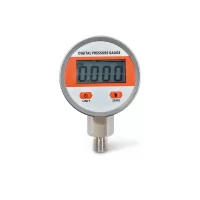
Local indication — digital pressure gauges where no control system is present.
Switching — pressure switches where the requirement is a contact rather than a measurement.
Sealing components — the same sealing technologies are supplied as standalone products to other manufacturers: see the glass-to-metal seal and metal bellows guides.
Choosing the Manufacturer
The decisions above are yours. What the manufacturer determines is whether the instrument holds those specifications in service.
Does the supplier make the sensing element, or buy it? In-house pressure sensor production gives control over accuracy, thermal compensation, and long-term stability. A module assembler does not have that leverage.
Can they state thermal effects, not just room-temperature accuracy? The fastest way to separate instrument makers from resellers.
What is the warranty term, and what does it cover?
Do they cover the adjacent lines you will need — level, differential, switches, gauges — so you can standardise spares?
Can they produce the documentation your project requires? Certificates, material documentation, and traceability are best settled before the order, not after.
About WTsensor
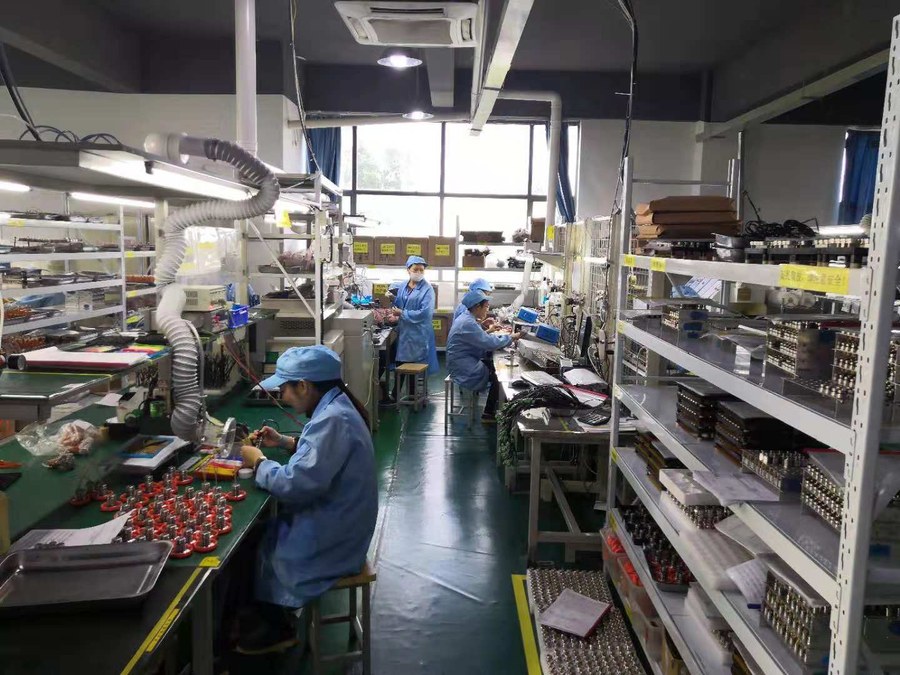
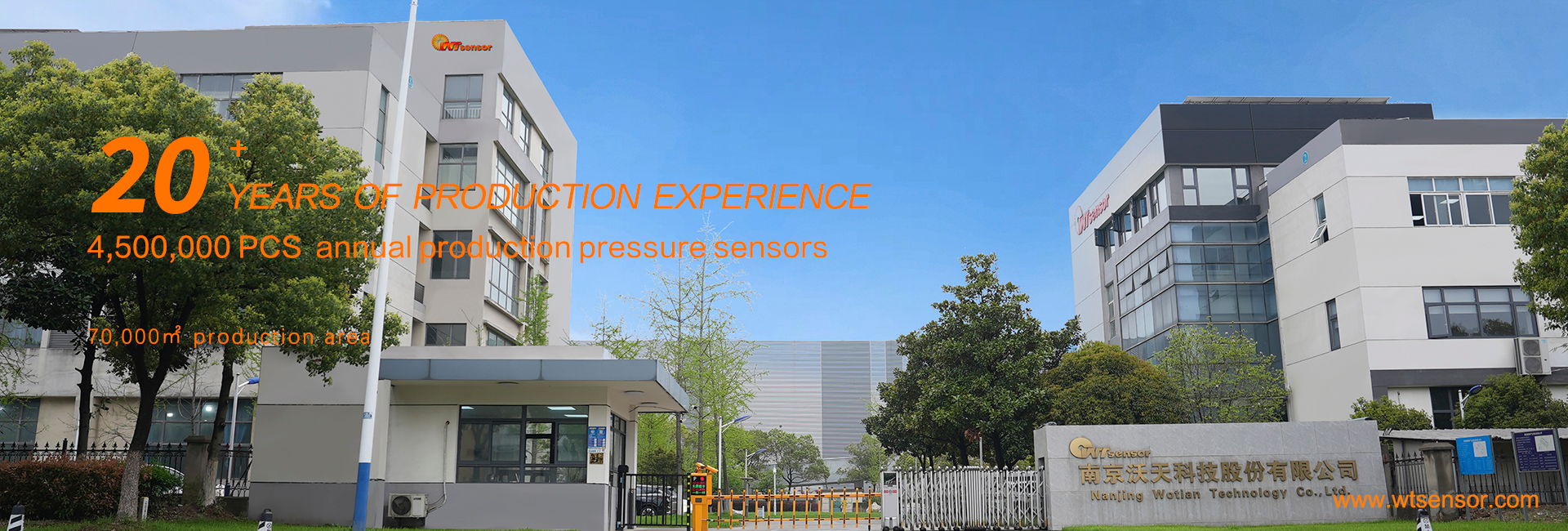
WTsensor (Nanjing Wotian Technology) has manufactured pressure sensors and transmitters since 2005, producing more than 4.5 million pressure sensors a year from a 25,000 m² base with 70+ R&D engineers, and exporting to more than 100 countries. Its core technologies are diffused silicon and glass micro-fused sensing elements, manufactured in-house and built into both standalone cores and complete instruments.
The transmitter range covers general industrial, smart HART, explosion-proof, remote-seal, sanitary, and high-pressure platforms, with all-316L wetted parts as standard and an 18-month warranty. Quality systems are certified to ISO 9001 and IATF 16949, and the range is covered by CE, RoHS, REACH and EMC documentation, with ATEX certification for hazardous-area duty. Because ranges, accuracy options, and material combinations are configuration-dependent, final specifications are confirmed against the current datasheet at quotation.
FAQ
How do I choose the right pressure range?
Size the range so the normal working pressure falls in the upper two-thirds of the span, and confirm that proof pressure comfortably exceeds the highest transient. Avoid ranges far wider than the working pressure — accuracy is a percentage of full scale, so unused range is unused accuracy.
What does 0.5 %FS accuracy mean in practice?
The combined error is within ±0.5 % of the full-scale range. On a 1 MPa range that is ±5 kPa, wherever you operate. Establish separately whether the figure includes thermal zero and span shift over your ambient range, because a room-temperature-only figure understates real field error.
Do I need absolute or gauge pressure?
Gauge when measuring pressure above local atmosphere and barometric variation is not relevant to the result, which covers most process and hydraulic duties. Absolute when the measurement is low enough that atmospheric pressure is a material fraction of the reading — vacuum systems, condensers, and low-kPa measurements.
What is the difference between proof pressure and burst pressure?
Proof pressure is the maximum the instrument withstands without a permanent calibration shift. Burst pressure is where the pressure-containing structure fails. Proof pressure is the figure that matters when sizing against water hammer and start-up transients, and both should appear on the datasheet.
When should I use a flush diaphragm instead of a threaded connection?
Whenever the medium is viscous, crystallising, particulate-laden, or prone to polymerising. A threaded port creates a dead pocket where solids accumulate and eventually block the pressure path, producing a slow and convincing wrong reading.
Which wetted material should I specify?
316L stainless steel is the default for water, air, hydraulic oil, and most neutral media. Move to Hastelloy C for chloride-bearing or mixed-acid media including seawater, to a PTFE-coated diaphragm for aggressive chemistries, and to 17-4PH where the limiting factor is strength at high pressure rather than corrosion.
Can one transmitter serve both pressure and level?
The principle is the same — level is inferred from hydrostatic pressure — but the instruments differ. A level transmitter is configured for a liquid column, often with a submersible IP68 body and a sealed-gauge reference. A standard transmitter can be ranged for level in an open tank, but for submersible or deep-well duty, specify a dedicated level transmitter.
How important is the IP rating?
It is one of the most frequently underestimated specifications. IP65 is adequate only in a sheltered indoor location; specify IP67 for outdoor and washdown duty, and IP68 for submersible or permanently wet installations — confirming that the rating applies to the complete assembled instrument under the stated test conditions.
What output signal should I choose?
Default to 4–20 mA two-wire for robustness and compatibility. Choose HART when you want remote configuration and diagnostics over the same loop, RS485/Modbus when you already run a bus, and wireless when the installed cost of cabling exceeds the instrument cost or cabling is impractical — verifying radio coverage at the actual installation point first.
Conclusion
Pressure transmitter selection comes down to eight decisions, made in order: pressure type, range, accuracy, output, connection, materials, environment, and hazardous-area rating. Get the first three right and the instrument measures what you need. Get the last five right and it is still doing so years later.
Need help specifying? Send your working pressure, maximum transient, medium, ambient conditions, and required output — WTsensor responds with a recommended configuration and a technical evaluation, typically within one business day.
-
Inside Differential Pressure Sensor Core Manufacturing: From Gold Wire Bonding to Final Protection
Read More > -
How Welded Pressure Transmitters Prevent Leakage Before Calibration
Read More > -
Why Temperature Transmitters Drift—and How Our Production Process Prevents It
Read More > -
How We Build Reliable Digital Pressure Gauges
Read More > -
Inside PCM710 Digital Pressure Switch Manufacturing: Assembly & Calibration QC
Read More > -
What is a Glass-to-Metal Seal? Complete Guide for Engineers
Read More > -
What is a Metal Bellows? Complete Guide for Engineers
Read More > -
What is a Wireless Pressure Sensor? Complete Guide for Industrial IoT
Read More >
This article Tags: pressure transmitter
Back to List